Top 10 Benefits of Using Single Girder Overhead Cranes for Your Business?
Businesses today seek efficiency and productivity. One effective solution is the Single Girder Overhead Crane. This equipment offers many advantages that can transform operations.
Using a Single Girder Overhead Crane enhances workflow significantly. It frees up valuable floor space. This design minimizes interference with other operations. As a result, employees can navigate the workspace easily. Efficiency increases because lifting tasks become faster. Lower operational costs can also be a delightful surprise.
However, it is crucial to recognize potential drawbacks. The Single Girder design might have limitations in lifting heavy loads. Companies should evaluate their specific needs carefully. Maintenance requirements can vary, potentially affecting budget considerations. Despite these points, the Single Girder Overhead Crane remains a practical choice. It encourages businesses to think critically about their lifting solutions.
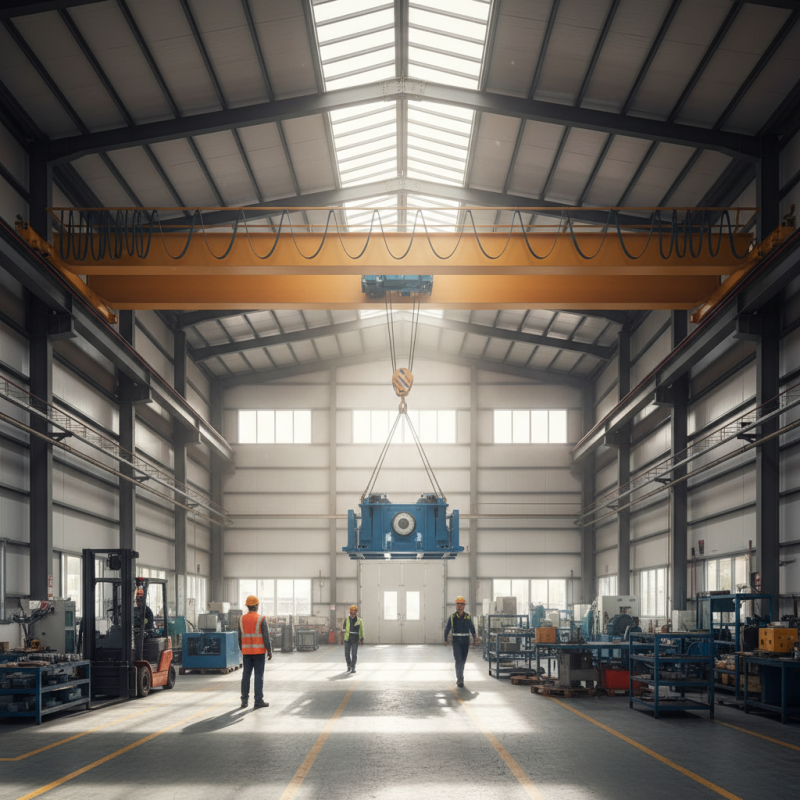
Benefits of Increased Workspace Efficiency with Single Girder Cranes
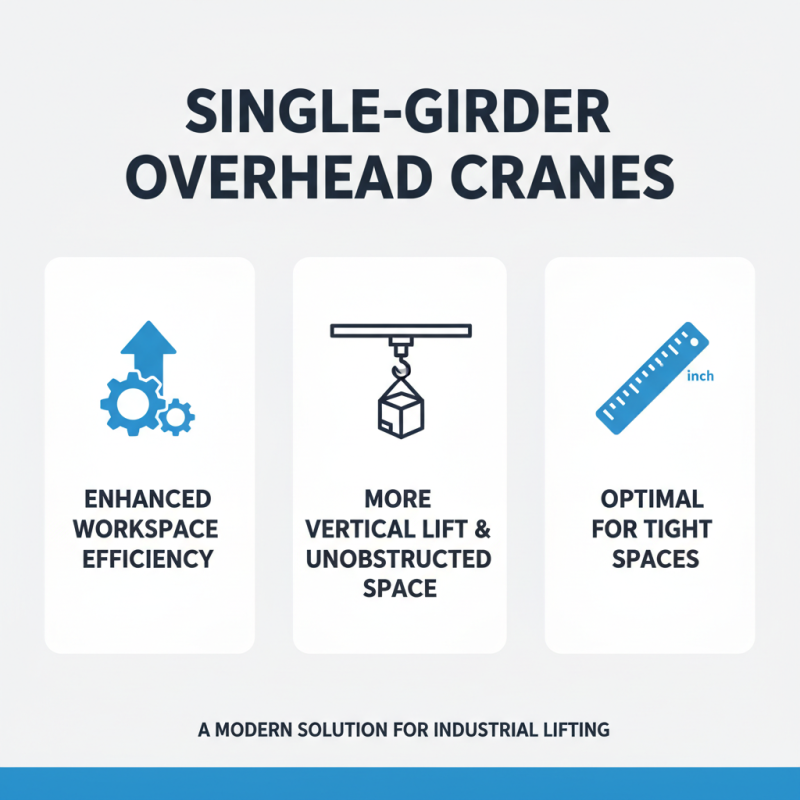
Single girder overhead cranes are gaining popularity in various industries. One significant advantage is their ability to enhance workspace efficiency. These cranes operate on a single beam, which allows for more vertical lift and an unobstructed workspace beneath. In environments where every inch counts, this design can make a noticeable difference.
Additionally, single girder cranes can handle moderate loads, which suits many business operations. They often require less headroom compared to traditional designs. This can free up valuable space for other activities or equipment. Less equipment clutter means better movement and workflow for employees. Workers can navigate areas more easily when cranes do not dominate the ceiling space.
However, there are limitations to consider. Not all single girder cranes can handle heavy operations or specific, bespoke tasks. Businesses should analyze their load requirements carefully. Efficiency might be compromised if a crane is overloaded. Users must reflect on their needs before making a decision, ensuring they choose the right crane for their operations. Balancing efficiency and capability is crucial for optimal performance.
Cost-Effectiveness: How Single Girder Cranes Reduce Operational Expenses
Cost-Effectiveness: How Single Girder Cranes Reduce Operational Expenses
Single girder overhead cranes are becoming increasingly popular in various industries. Their design offers significant cost advantages. Studies show that businesses can save up to 30% on operational costs when employing these cranes. This reduction stems from their lighter construction and lower energy consumption.
These cranes are often simpler to maintain. This leads to fewer downtime periods. Maintenance costs can decrease significantly. A report from the Crane Manufacturers Association states that the total cost of ownership is about 20% lower for single girder models compared to their double girder counterparts. Companies can allocate those savings elsewhere for growth.
Tip: Regular inspections can prevent costly repairs. Keep a maintenance log to track performance over time.
Another benefit is their ability to maximize warehouse space. Their smaller profile leaves more usable floor area. These cranes allow for better workflow and storage options. Businesses often underestimate space optimization and its financial impact.
Tip: Conduct a layout review to identify the optimal crane placement. This can improve efficiency and save costs.
Incorporating single girder cranes isn't without challenges. Some may find it initially hard to assess their full benefits. It's essential to analyze both immediate and long-term savings. Overlooking energy efficiency can lead to hidden costs. Thus, thoughtful planning is vital for success.
Enhanced Safety Features of Single Girder Overhead Cranes
Single girder overhead cranes offer enhanced safety features that can greatly benefit various industries. These cranes are designed with a focus on operator safety and accident prevention. The lightweight structure allows easier handling and operation. Less weight often means less risk during lifting operations. Operators enjoy better visibility while maneuvering, leading to more accurate handling of loads.
Additionally, single girder overhead cranes often come equipped with advanced safety mechanisms. These include anti-collision systems and overload protection features. Such technologies help minimize human error. However, the reliance on technology should be complemented by regular training. Operators need to be aware of their limits and the crane's capabilities. Improper training can lead to overconfidence, which is dangerous.
Moreover, clear visibility ensures that operators can see their surroundings. This leads to better communication among team members. When workers are aware of the load and its path, the likelihood of accidents decreases. However, one must not ignore the importance of maintenance. Neglected cranes can become hazardous. Regular inspections and a proactive approach to maintenance are essential for safety.
Versatility and Adaptability for Diverse Industrial Applications
Single girder overhead cranes are highly versatile, making them suitable for various industrial applications. Reports indicate that industries like manufacturing and warehousing leverage these cranes extensively. A recent survey found that nearly 70% of warehouses use overhead cranes due to their adaptability. This flexibility allows businesses to handle diverse operations, from lifting heavy materials to intricate assembly tasks.
These cranes can be designed to fit unique workspace dimensions. They are ideal for low-clearance areas, which is often a problem in older buildings. Their lightweight structure means less energy consumption, which can lead to cost savings. However, the limited load capacity can be a drawback. Companies might find themselves needing more power for extensive lifting tasks. Evaluating this before purchase is crucial.
Single girder cranes also require less maintenance compared to multi-girder systems. This aspect is beneficial for companies aiming to minimize downtime. Yet, the trade-off is that they may not be as robust under excessive loads. Thus, while their versatility is commendable, businesses should consider their specific needs carefully. Balancing versatility and efficiency is vital for maximizing the benefits.
Simplified Maintenance and Reduced Downtime with Single Girder Designs
Single girder overhead cranes offer significant advantages, especially when it comes to maintenance. Their simplified design means there are fewer components to manage. Less intricate systems often lead to easier inspections. When a part needs replacement, the process can be quick and efficient. This is essential for businesses looking to minimize downtime.
Reduced downtime is crucial for maintaining productivity. With fewer breakdowns, operations run more smoothly. A simple maintenance schedule is easier to follow. This can free up valuable time for your team. Workers can focus on core tasks rather than spending hours on crane upkeep.
Sometimes, businesses overlook the importance of regular checks. Skipping maintenance can lead to larger issues down the line. Not every operation takes full advantage of these benefits. Yet, acknowledging maintenance needs is vital for long-term success. Embracing the simplicity of single girder designs could lead to enhanced performance and greater reliability.
Top 10 Benefits of Using Single Girder Overhead Cranes