Top 10 Benefits of Using Double Girder Cranes for Your Business?
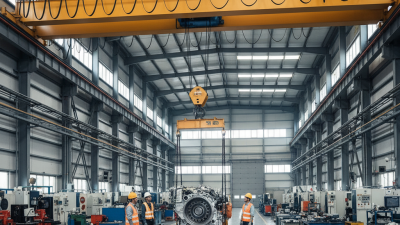
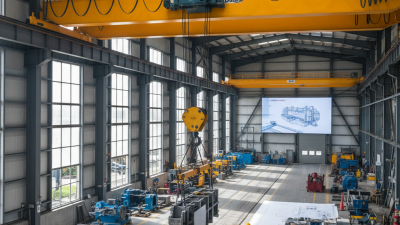
In the competitive world of industrial operations, efficiency and reliability are paramount. The Double Girder Crane stands out as a powerful solution for many businesses. Its design allows for higher lifting capacities and extended spans, making it ideal for large facilities.
Utilizing a Double Girder Crane can significantly enhance productivity. These cranes offer improved stability and precision during operations, reducing the risk of accidents. However, implementing this system requires careful planning. Poor installation may lead to operational challenges, emphasizing the need for skilled professionals.
Moreover, while the initial investment might seem high, the benefits can outweigh the costs in the long run. Businesses must weigh their options carefully. The choice to use a Double Girder Crane could lead to transformed workflows, but it also invites questions about maintenance and potential downtimes. Balancing these factors is key to making an informed decision.
Understanding Double Girder Cranes: An Overview of Their Functionality
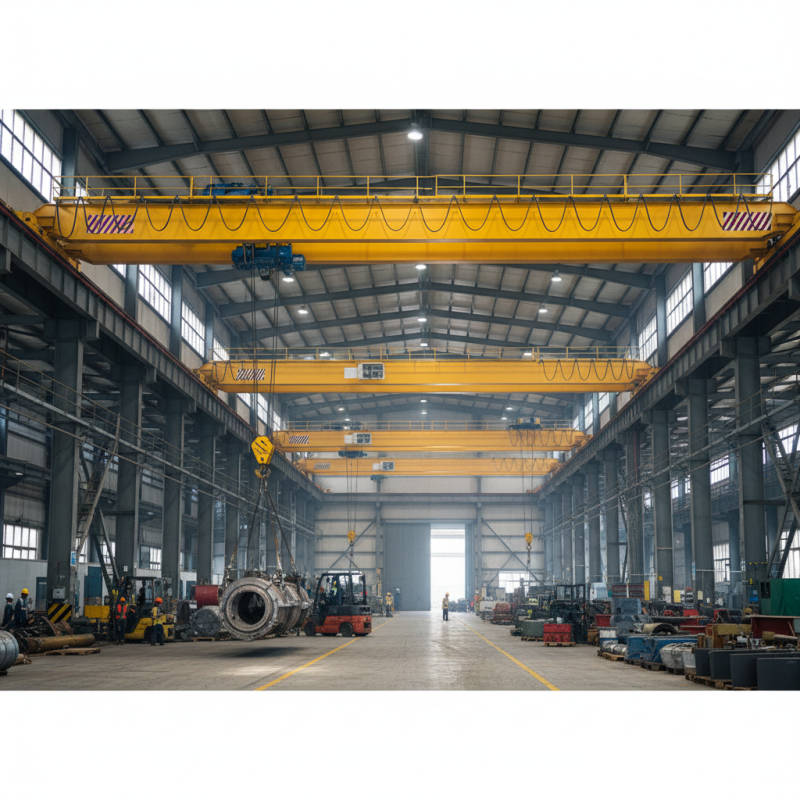
Double girder cranes are essential in modern industries. Their design features two robust girders that provide superior strength and stability. This robust structure allows them to lift heavier loads compared to single girder cranes. According to a recent industry report, they can handle loads up to 100 tons, making them ideal for heavy manufacturing and construction sites.
These cranes offer higher lift heights and increased hook heights. This means businesses can utilize vertical space more effectively. However, operational efficiency can vary depending on the setup and training of personnel. A study found that improper use can reduce lifting efficiency by up to 30%. Training operators on safety and functionality can mitigate such issues and improve productivity.
In addition, double girder cranes often come with advanced technology. Many include features such as automated controls and enhanced safety systems. These advancements can lead to reduced downtime and lower maintenance costs. Yet, integrating new technology requires adaptation and continuous learning. Companies must be prepared for a learning curve to maximize these benefits. This is an ongoing challenge in the industry.
Top 10 Benefits of Using Double Girder Cranes for Your Business
Enhanced Lifting Capacity: How Double Girder Cranes Outperform Single Girder
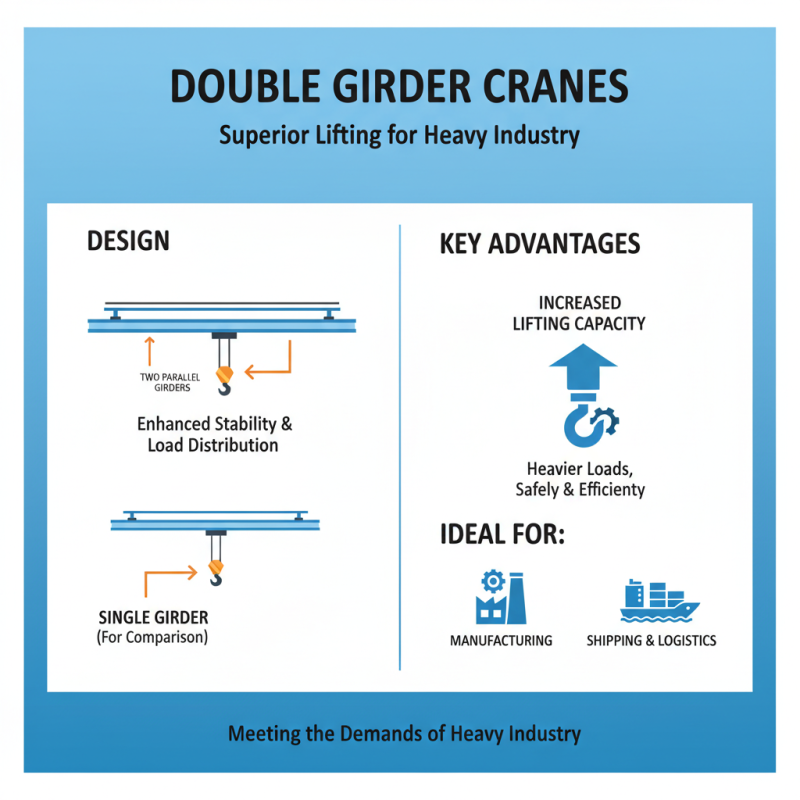
Double girder cranes are increasingly favored in industrial environments due to their superior lifting capacity. Unlike single girder cranes, they feature two parallel girders that provide enhanced stability. This design allows them to lift heavier loads safely and efficiently. Industries like manufacturing and shipping often require equipment that can handle substantial weights. Double girder cranes meet this need seamlessly.
These cranes can lift more than their counterparts. For example, a double girder crane can manage loads up to 50 tons or more, depending on the model. This capability is crucial for businesses that frequently handle heavy materials. However, increased capacity comes with challenges. Proper maintenance is vital to ensure these cranes operate at peak performance. Neglecting this can lead to costly downtime, raising long-term operational risks.
Operating double girder cranes requires skilled personnel. Training is essential for safe operation. Without it, accidents can occur, leading to injuries or damage. Companies should create a comprehensive training plan. Additionally, regular inspections will help address potential issues before they become serious. In the end, while double girder cranes offer remarkable benefits, they demand a commitment to safety and maintenance for optimal results.
Increased Stability and Safety in Industrial Applications
In industrial environments, stability and safety are paramount.
Double girder cranes stand out for their impressive structural integrity.
Reports suggest that they can handle loads up to 100 tons
with enhanced stability. This capability minimizes the risk of tipping or swaying.
Such cranes absorb shocks effectively, making them ideal for heavy lifting tasks.
Industrial safety statistics indicate that proper crane usage can reduce accidents by 25%.
Double girder cranes provide a wider span and lift heights that traditional single girder models can’t match.
This leads to less maneuvering space needed and fewer collisions.
However, organizations must ensure operators are properly trained.
A skilled operator is crucial for maximizing the benefits of these cranes.
Despite their advantages, maintenance issues must be addressed.
Regular inspections can uncover problems before they escalate.
Up to 70% of crane accidents result from mechanical failure.
Investing in routine checks can significantly enhance safety and operation reliability.
It's imperative to focus on both the equipment and the operators for optimal safety in the workplace.
Versatility in Design: Customization Options for Various Industries
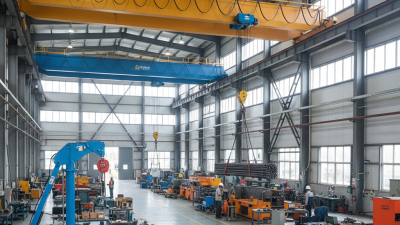
Double girder cranes offer a remarkable level of versatility in design, making them suitable for various industries. They can be tailor-made to fit specific operational needs. Industries like construction, manufacturing, and shipping can all benefit from customized solutions. You can adjust dimensions, load capacities, and control systems to enhance productivity. This flexibility allows businesses to optimize their workflows efficiently.
Adaptability extends to the type of operations. Some businesses may require overhead cranes for lifting heavy machinery, while others might need smaller designs for handling components. Not all companies have the same requirements. Assessing your operational needs is critical. Sometimes, the best option might be to consult with experts. Not all customization processes are straightforward. There can be challenges in balancing cost and function. Recognizing these hurdles allows companies to better plan and allocate resources for future enhancements.
Cost-Effectiveness: Long-Term Benefits of Investing in Double Girder Cranes
Investing in double girder cranes brings significant long-term cost-effectiveness. These cranes, designed to lift heavier loads, enhance productivity in warehouses and manufacturing facilities. Their robust structure allows them to operate efficiently under demanding conditions. This means fewer breakdowns, less downtime, and ultimately, lower maintenance costs. In industries dependent on heavy lifting, reliability is crucial. Thus, the initial investment pays off quickly.
Another critical aspect is energy efficiency. Double girder cranes often consume less energy compared to their single girder counterparts. Reduced energy consumption translates to cost savings over time. Additionally, these cranes can be integrated with modern technology, which may further optimize operations. However, optimizing their performance requires investing in proper training for operators. Without training, inefficiencies may arise, negating some of the cost benefits.
While double girder cranes offer various advantages, businesses must also be mindful of potential shortcomings. The initial purchase price can be higher than simpler crane models. This higher upfront cost might deter some small businesses. It’s essential for businesses to analyze their specific needs. Weighing the immediate costs against long-term savings is crucial. Decisions should be based on careful planning to ensure the investment is justified.