Top 10 Best Single Girder Crane Models for Your Business Needs?
Choosing the right equipment is critical for operational efficiency. A Single Girder Crane can significantly impact your business. It offers a reliable solution for lifting and moving materials. These cranes are ideal for various industries like manufacturing and construction.
When selecting a Single Girder Crane model, evaluate your needs carefully. Each model has unique features and specifications. It’s important to consider factors like load capacity and span length. Some models excel in compact spaces, while others suit larger sites. Reflect on how each crane can fit into your existing workflow.
Investing in the right crane is not just about the immediate benefits. It's about ensuring long-term productivity and safety. A poorly chosen crane can lead to inefficiencies and even accidents. Therefore, understanding the best models available is essential. This guide will help you navigate your options and choose wisely.
Top Single Girder Crane Models: Key Features and Specifications
When selecting a single girder crane, understanding its key features is crucial. The load capacity is often the first consideration. Most models handle loads from 1 to 20 tons effectively. According to recent industry data, cranes in the 5-ton range are noted for their versatility. This makes them ideal for small to medium-sized warehouses.
Another essential specification is the span length. Many single girder cranes offer spans from 10 to 50 feet, allowing flexibility in various operational spaces. This adaptability often translates into higher efficiency and productivity. Moreover, the lifting speed typically ranges from 10 to 20 meters per minute, impacting the workflow directly.
However, potential buyers should reflect on their specific applications. Overestimating load capacity could lead to safety concerns. Some models may not suit all environments, especially outdoors. Additionally, maintenance costs can significantly impact long-term investment. Balancing capacity, span, and maintenance requirements is essential for informed decision-making.
Load Capacity Comparison of Leading Single Girder Cranes in the Market
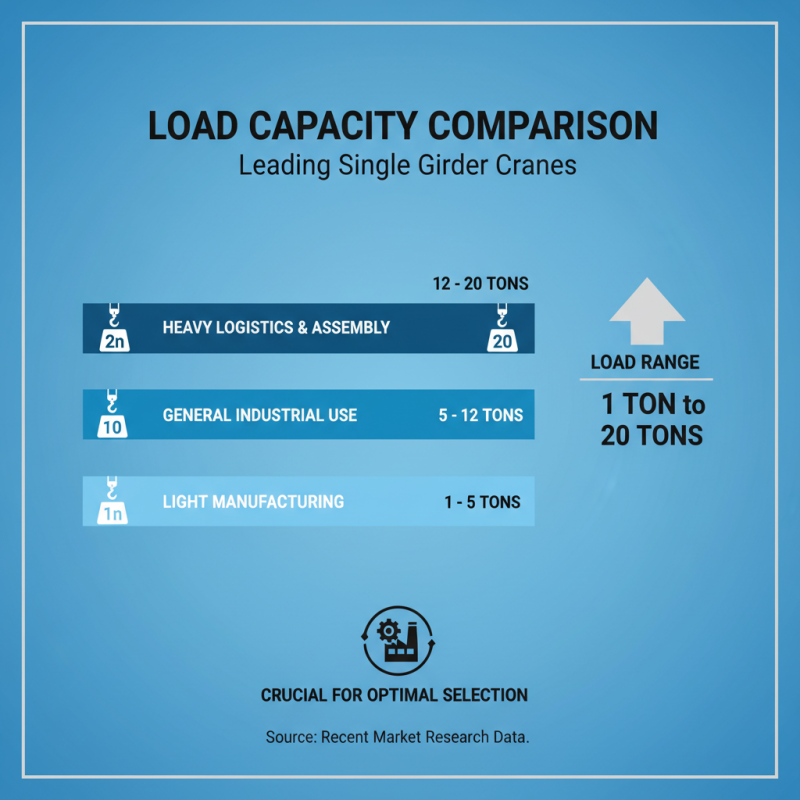
When selecting a single girder crane, understanding load capacity is crucial. Various models exist, each designed for specific tasks. Recent market research indicates that most single girder cranes can lift between 1 ton to 20 tons. This range accommodates a variety of business applications, from light manufacturing to heavy logistics.
Some models excel in efficiency but have lower maximum capacities. For example, cranes rated at 2-5 tons are often more agile but may not be suitable for heavy-duty operations. It’s essential to assess your business's unique requirements before making a decision. In some cases, a smaller capacity crane might suffice, while other businesses may find themselves constantly overloaded.
The selection process often requires reflection. Are you choosing based on cost alone? Sometimes, a higher initial investment pays off in the long run. Balancing load capacity and operational efficiency can yield significant returns. However, this balance is often overlooked in decision-making, leading to unsuitable purchases. Proper planning and analysis are vital to making the best choice for your operational needs.
Industry Applications: Where Single Girder Cranes Excel
Single girder cranes are popular in various industries due to their efficiency and adaptability. They excel in environments with limited space, such as warehouses and manufacturing plants. With a compact design, these cranes can handle heavy loads while taking up minimal floor space. This is crucial in busy settings where maneuverability is key.
In the construction industry, single girder cranes play a vital role. They transport materials swiftly, enhancing productivity on the job site. However, there are challenges. For instance, improper load management can lead to accidents. Operators must undergo proper training to mitigate risks. Understanding load limits is essential.
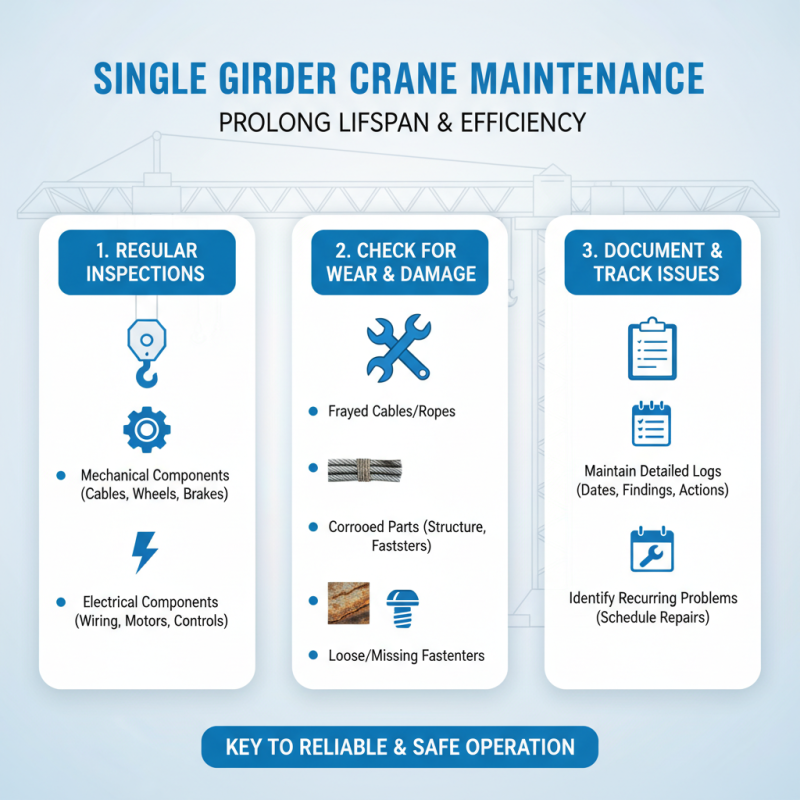
Additionally, in the logistics sector, these cranes streamline operations. They can quickly move pallets and containers, reducing wait times. Yet, maintenance is often overlooked. Regular inspections are necessary to ensure safety and operational efficiency. Neglecting this aspect can lead to costly downtime. Awareness of these factors can make a significant difference in the success of using single girder cranes.
Cost Analysis: Investment vs. ROI for Single Girder Cranes
Investing in single girder cranes can significantly impact your bottom line. According to industry reports, these cranes typically range from $10,000 to $50,000, depending on specifications. The initial investment can be substantial, but the return on investment (ROI) can be compelling. Many businesses experience a payback period of 2-3 years, particularly in high-demand sectors like manufacturing and construction.
However, there are hidden costs. Maintenance, training, and power consumption add up over time. Some reports suggest maintenance costs can reach 15-20% of the initial price annually. It’s crucial to factor these into your calculations. While a crane might enhance productivity, excessive downtime due to poor maintenance can eat into your profits. Assessing these aspects is vital.
Finally, ROI is not just about money. It includes improved safety and efficiency. A well-maintained crane can reduce workplace accidents, ultimately saving costs associated with injuries and litigation. But this benefit requires diligent oversight. Without regular audits and staff training, you risk undermining the very advantages you seek.
Top 10 Best Single Girder Crane Models Cost Analysis