How to Choose the Best Electric Gantry Crane for Your Needs?
Choosing the right Electric Gantry Crane can significantly impact your operations. According to industry expert John Miller, "Selecting the correct crane is key to efficiency and safety." With numerous options available, it’s essential to evaluate your specific needs before making a decision.
Electric Gantry Cranes come in various sizes and capacities. Your choice depends on load requirements, space availability, and operational frequency. For instance, a lightweight model may suit small workshops, while heavy-duty options are ideal for construction sites. Each decision can affect cost and performance, requiring careful consideration.
Additionally, don't overlook maintenance and support services. A reliable supplier will offer ongoing assistance. Take your time to assess all options. Reflect on potential limitations and areas for improvement. Ultimately, investing in the right Electric Gantry Crane can enhance productivity and safety in your operations.
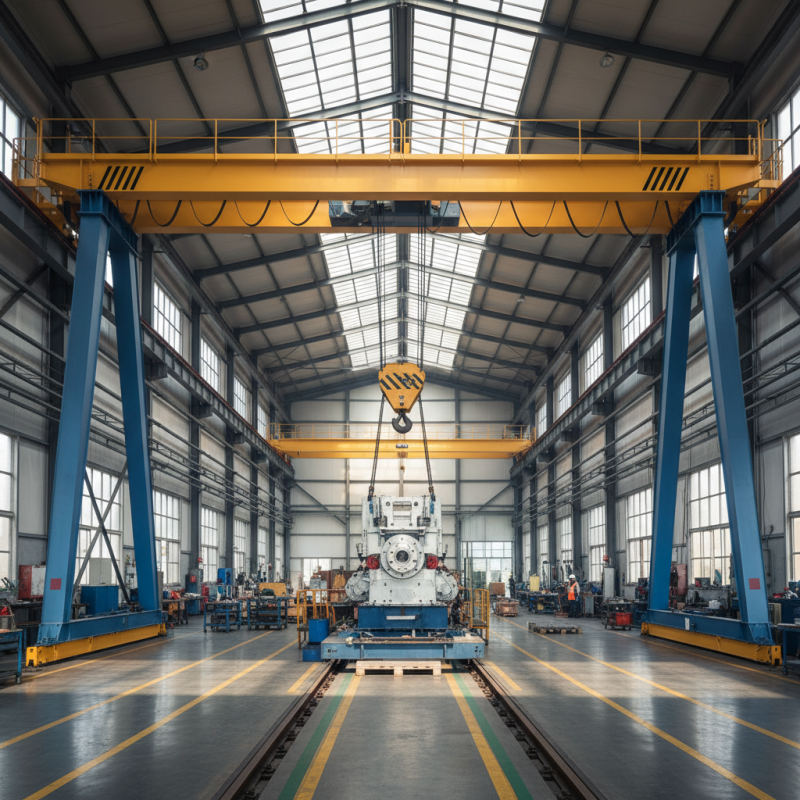
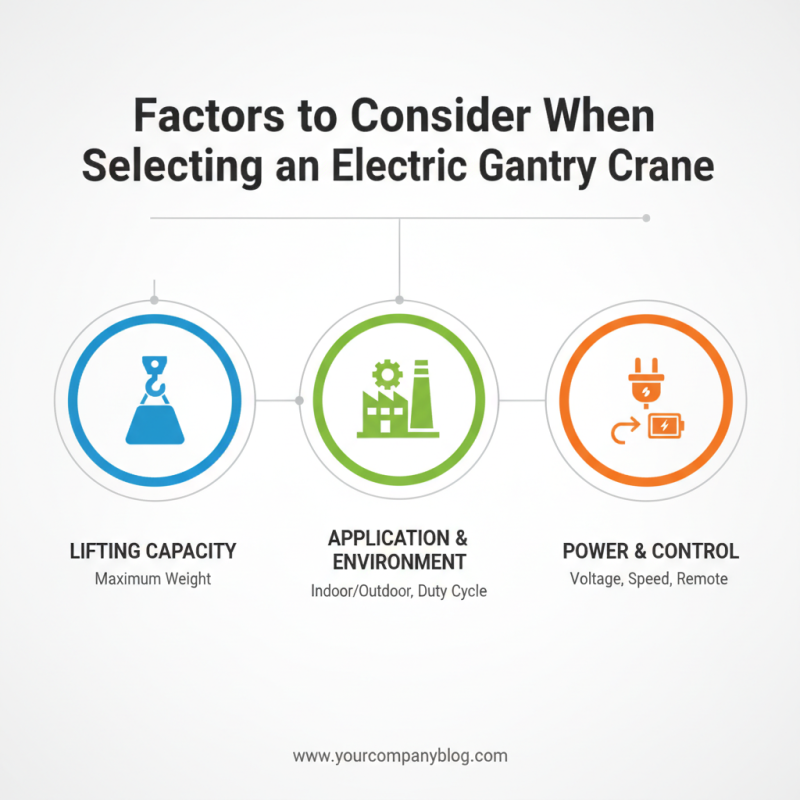
Factors to Consider When Selecting an Electric Gantry Crane
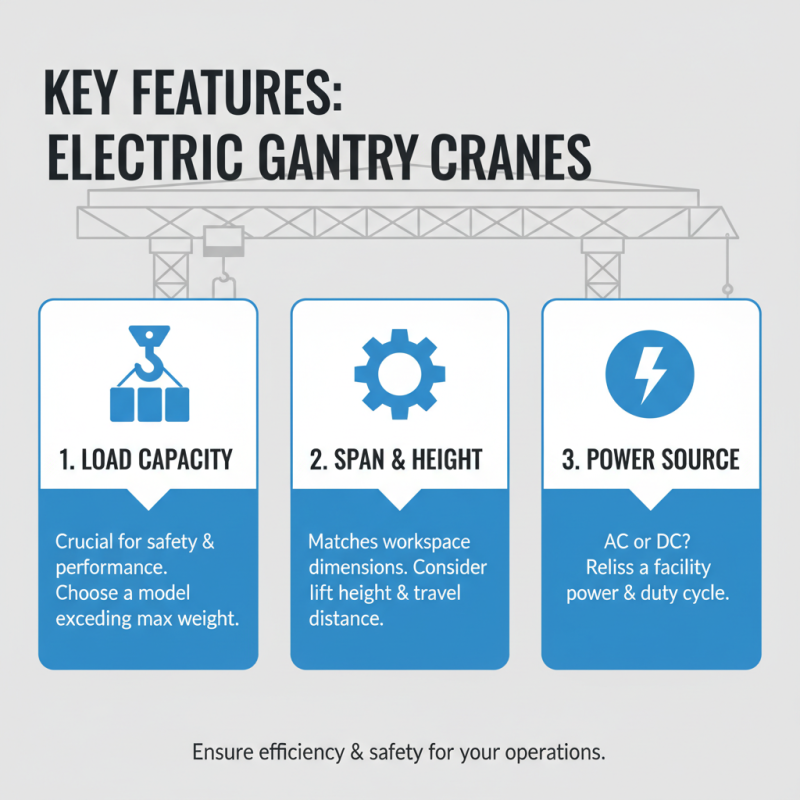
Choosing the right electric gantry crane requires careful consideration. Start by assessing your lifting capacity needs. Identify the max weight you need to handle. This ensures the crane will perform efficiently without exceeding its limits.
Consider the span and height of your workspace. Measure the area where the crane will be used. Adequate clearance is essential. It may be beneficial to account for future expansion or changes in workflow.
Tips: Always check if the crane's design allows for easy assembly and transportation. Look for models that facilitate mobility. Remember, ease of use can significantly affect productivity.
Another aspect to reflect on is the power supply requirements. Depending on your site, the choice of electric power versus battery may vary. Ensure it matches your operational needs. Choosing a model that fits your specific environment is crucial for reliable performance.
Tips: Review user feedback on various models. Sometimes, firsthand experiences reveal potential flaws or successes that specifications alone do not convey. Don't rush; the right choice can improve efficiency and safety in the long run.
Types of Electric Gantry Cranes and Their Applications
When selecting an electric gantry crane, understanding the different types and their applications is crucial. Generally, electric gantry cranes fall into two main categories: adjustable height and fixed height. Adjustable height cranes offer flexibility, making them ideal for varied workspace dimensions. These models typically support lifting capacities from 1 to 15 tons, catering to a wide range of lifting needs. Conversely, fixed height cranes provide stability and are often used for repetitive tasks in workshops.
Electric gantry cranes serve diverse industries. For instance, in construction, they are essential for transporting heavy materials across job sites. In manufacturing, these cranes enhance efficiency by streamlining the movement of components on assembly lines. According to a recent industry report by ResearchAndMarkets.com, the global electric gantry crane market is projected to grow significantly, driven by increased industrial activity and automation.
Tip: When choosing a crane, consider the workload and the frequency of use. Aim for a model that not only fits your capacity needs but also matches the environment in which it will operate.
Another important aspect is safety. Ensure your chosen crane has features such as automatic overload protection. Regular maintenance is essential to prevent unexpected failures. Many operators overlook this, which can lead to costly downtime. Evaluate both current and future lifting requirements to make an informed choice.
How to Choose the Best Electric Gantry Crane for Your Needs?
| Type |
Load Capacity |
Span |
Height |
Applications |
| Single Girder Gantry Crane |
Up to 10 tons |
10-20 meters |
3-6 meters |
Manufacturing, Warehousing |
| Double Girder Gantry Crane |
Up to 50 tons |
20-40 meters |
6-12 meters |
Construction, Shipping Yards |
| Portable Gantry Crane |
Up to 2 tons |
5-10 meters |
2-3 meters |
Maintenance, Light Duty Applications |
| Rail Mounted Gantry Crane |
Up to 100 tons |
30-50 meters |
8-15 meters |
Container Handling, Loading Docks |
Understanding Load Capacity and Specifications
When selecting an electric gantry crane, understanding load capacity and specifications is crucial. Each crane has a defined load limit. Choosing one that matches your requirements ensures safety and efficiency during operations. Misestimating your load can lead to dangerous situations. Always consider the weight of your heaviest items.
Tips: Verify the maximum load rating against your needs. If your loads vary, consider a crane with a higher capacity to accommodate future needs.
Specifications also include height and travel capabilities. Look for cranes that can reach the necessary vertical and horizontal distances. This can impact your workflow directly. An inadequate reach can lead to time lost repositioning items.
Tips: Pay attention to the design. A well-structured crane will minimize the risk of tipping or swaying. Proper support is vital for both safety and efficiency in operations. Be mindful of your workspace layout as well; factoring in the crane's range can prevent future complications.
Load Capacity Comparison of Electric Gantry Cranes
Evaluating Budget and Maintenance Requirements
When selecting an electric gantry crane, budget and maintenance requirements play crucial roles.
Consider your financial capacity first. Electric gantry cranes can vary widely in price, depending on features and load capacity.
A lower purchase cost may lead to higher maintenance expenses. Assess your long-term costs, not just the initial investment.
Regular maintenance is essential for the longevity of any crane. Some cranes require specific parts that may be expensive or hard to find.
It’s wise to understand the maintenance schedule. Think about the time and resources you can dedicate to upkeep.
Unexpected breakdowns can lead to costly delays and safety risks.
Be realistic about your operational environment. Dust, moisture, and heavy usage influence maintenance needs.
If your facility has unique challenges, factor those into your decision. Understanding these aspects is not always straightforward.
You may need to adjust your strategy over time as you gain more experience with the equipment.