How to Choose the Right Container Gantries for Your Operations?
Choosing the right container gantries for your operations is crucial. Expert John Smith, a veteran in the logistics sector, once stated, “Selecting the proper container gantry can make or break efficiency.” With numerous models available, understanding their specific functions is essential.
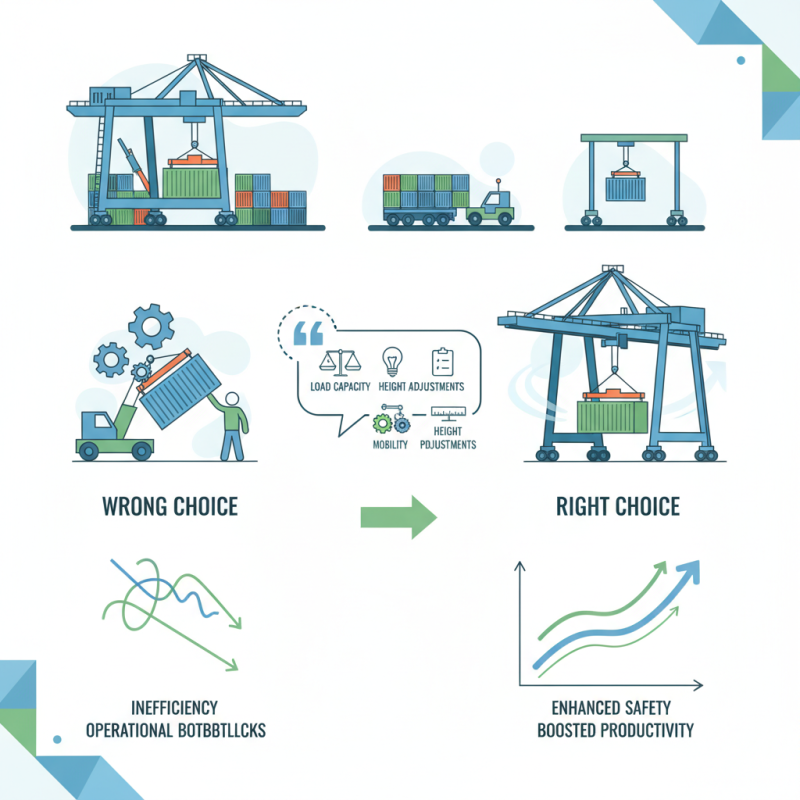
Container gantries provide support and mobility for heavy loads. They play a vital role in container handling at ports and warehouses. The right choice greatly impacts operational success. Features like load capacity, height adjustments, and mobility must align with your needs.
Mistakes in selection can lead to inefficiencies. Many operations suffer from inadequate equipment that fails to meet demands. Consider the specific tasks your gantries will perform. An informed decision not only enhances safety but also boosts productivity.
Understanding the Different Types of Container Gantries Available
Container gantries play a crucial role in logistics and shipping operations. Selecting the right type is essential for efficiency. Understanding the various types can simplify this process. There are several container gantry options to consider, each with distinct features.
One type is the rubber-tyred gantry (RTG). These are mobile and flexible, ideal for smaller terminals. RTGs can navigate tighter spaces, making them suitable for urban logistics. However, maintenance can be challenging due to moving parts. Another option is the rail-mounted gantry (RMG). RMGs provide stability and are great for high-volume operations. They can handle heavy containers with ease. Yet, their fixed positioning limits flexibility in space utilization.
There's also the ship-to-shore (STS) gantry crane, designed for loading and unloading from vessels. STS cranes have a higher lifting capacity but require significant infrastructure. This complexity can lead to higher operational costs. Each gantry type has its pros and cons. Understanding these details is key to making the right choice for your operations.
How to Choose the Right Container Gantries for Your Operations?
| Type of Gantry |
Load Capacity |
Height |
Span Width |
Additional Features |
| Ship-to-Shore Gantry |
40-65 tons |
40-60 feet |
20-30 feet |
Remote control, anti-sway system |
| Rail Mounted Gantry (RMG) |
30-50 tons |
30-50 feet |
20-40 feet |
Automated operations, scheduled routes |
| Rubber-Tired Gantry (RTG) |
30-50 tons |
20-40 feet |
20-30 feet |
Flexible positioning, low ground pressure |
| Stacking Gantry |
25-40 tons |
15-30 feet |
10-20 feet |
Height-adjustable, compact design |
Key Factors to Consider When Selecting Container Gantries
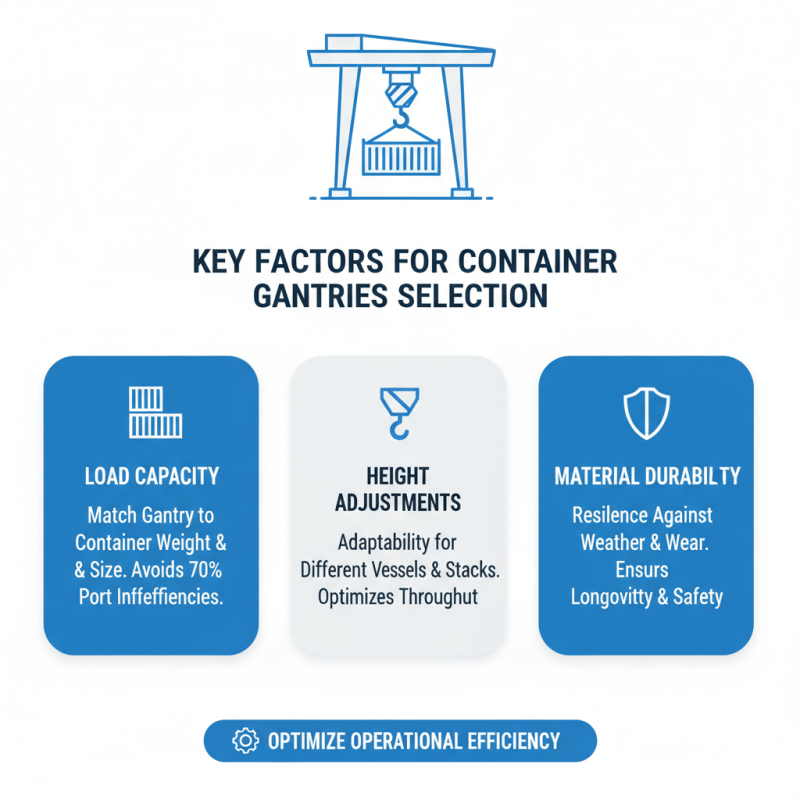
Selecting the right container gantries is crucial for optimizing operational efficiency. Various factors influence this decision, including load capacity, height adjustments, and material durability. According to industry reports, an estimated 70% of port inefficiencies stem from inadequate equipment choices. Ensuring the gantry can handle the specific weight and dimensions of containers directly impacts productivity.
When considering height adjustments, evaluate the maximum stack height in your yard. A gantry that cannot accommodate taller stacks limits your space usage. Research indicates that optimizing height can increase container throughput by up to 30%. Also, assess the materials used in construction. Steel gantries generally provide better durability than aluminum, especially in harsh weather conditions.
Tip: Regular maintenance checks can significantly extend the lifespan of your gantries. Address minor repairs before they develop into larger issues. Additionally, consult with engineers about the ideal design for your geographic location. Every port has unique challenges, which require tailored solutions. Remember to involve your team in the selection process, as their firsthand experience can provide valuable insights.
Evaluating the Capacity and Specifications for Your Needs
When selecting container gantries for your operations, it's crucial to evaluate their capacity and specifications.
According to the International Organization for Standardization (ISO), container handling systems vary widely in capacity, ranging
from 30 tons for small operations to over 100 tons for larger terminals. This range indicates
the necessity to match the gantry's specifications with your operational needs.
Different operations might require distinct features. For instance, a facility focused on containers with heavy load requirements
may prioritize higher lifting capacities and durability. Conversely, operations dealing with lower volumes might benefit from
more compact, lighter gantries. Recent reports reveal that 70% of operations tap into automated systems, which can influence
the design and specifications needed for efficiency.
Tip: Analyze your peak load data and operational patterns. This analysis can help identify the suitable gantry specifications.
Moreover, assess the ground conditions of your facility. The bearing capacity of the ground must support the chosen gantry's weight and load. Each operation is unique, and
sometimes, investing in a more robust gantry becomes vital. User feedback suggests that ignoring ground assessments often leads to costly repairs and operational delays.
Tip: Regularly consult industry standards and benchmark against similar operations. This practice fosters a
better understanding of what specifications will work best for your particular situation.
Assessing Site Conditions and Space Requirements for Gantries
When assessing site conditions for container gantries, start by evaluating the ground stability. Poor soil conditions can jeopardize the safety and efficiency of operations. Reports indicate that nearly 20% of gantry failures are due to inadequate soil assessments. Utilize geotechnical studies to determine if the ground can support the weight and movement of the gantry systems.
Space requirements are equally critical. Container gantries require ample maneuvering space. Industry guidelines recommend at least 20 feet for lateral movement. However, this space can vary based on the operational flow and container stacking arrangement. Scrutinize the site's layout. Inadequate space can lead to traffic congestion and delays, disrupting your workflow significantly. Rely on layout simulations to visualize potential bottlenecks and optimize your design.
Environmental factors must also be considered. Weather conditions can affect gantry operations. For instance, high winds can pose significant risks. Research shows that wind speeds over 25 mph can impede gantry functionality. Assessing climate patterns can guide the selection of gantry features that withstand environmental stresses. Remember, an imperfect site analysis may lead to operational inefficiencies and increase costs in the long term.
Budget Considerations and Cost Efficiency in Gantry Selection
Selecting the right container gantries involves careful budget considerations. Understanding your financial limits can guide your choices. Container gantries come with varying costs. It's essential to compare prices while also keeping quality in mind. Opting for the cheapest option may lead to increased maintenance costs later on.
When assessing cost efficiency, think about the long-term benefits. Investing in high-quality gantries may save money over time. These products often have lower operational costs and higher durability. You want a balance between initial investment and ongoing expenses.
Tips:
- Evaluate the total cost of ownership, not just purchase price.
- Research maintenance costs for different gantry models.
- Consider the potential impact of delays caused by poor-quality gantries.
Reflecting on your
needs and priorities can enhance decision-making. Engage with experienced professionals in the industry. This can provide invaluable insights into the best budget practices. Aligning your operational goals with financial reality fosters better results.