How to Choose the Right Gantry Overhead Cranes for Your Needs?
Choosing the right Gantry Overhead Cranes is crucial for operational efficiency. The global crane market is projected to reach $70 billion by 2027, with a significant demand for overhead cranes. In the construction and manufacturing industries, proper crane selection impacts productivity and safety.
Gantry Overhead Cranes provide flexible lifting solutions in various settings. Their design allows for easy movement and versatility. However, many businesses overlook specific requirements such as load capacity and span. This can lead to improper equipment use. Neglecting such factors may result in higher operational costs and safety hazards.
In recent studies, companies that invest in the right cranes report a 30% increase in efficiency. Yet, organizations often struggle with the decision-making process. Many find it challenging to weigh the pros and cons of different models. A thoughtful approach to selecting Gantry Overhead Cranes can help mitigate these risks and enhance overall performance.
Understanding the Types of Gantry Overhead Cranes Available in the Market
When selecting gantry overhead cranes, understanding the types available is crucial. Portable gantry cranes are versatile. They work well in various locations. These cranes can be easily moved and set up. However, they may not support heavy loads. This is a limitation for some operations.
On the other hand, adjustable gantry cranes offer flexibility. Users can change their height and span. This makes them suitable for different tasks. But, stability can sometimes be an issue. Some models may wobble under heavy lifting. It’s important to assess your workspace before choosing.
Heavy-duty gantry cranes are designed for high capacity. They can lift substantial weights and are robust. Yet, they require more space and may need permanent installation. This can be a drawback for small operations. Reflect on your space and load requirements before finalizing your decision.
Key Specifications to Consider When Choosing Gantry Cranes
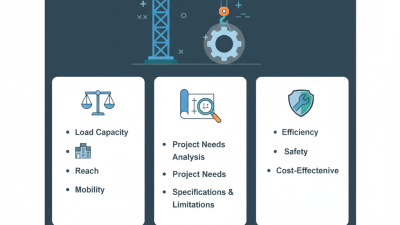
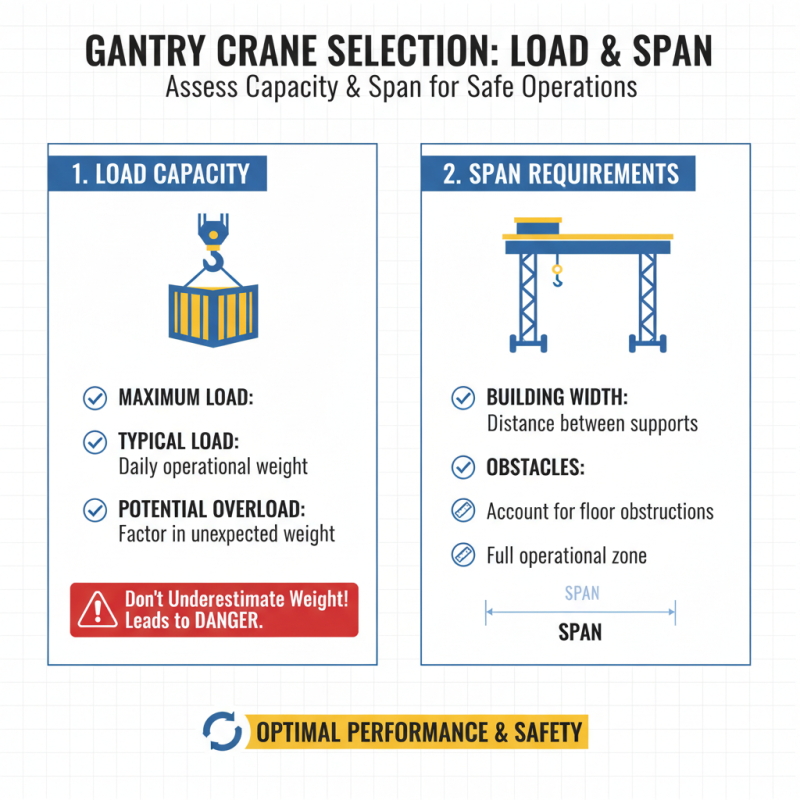
When selecting gantry overhead cranes, key specifications play a vital role. One crucial factor is the weight capacity. Determine the maximum weight you need to lift. This information ensures you choose a crane that can handle heavy loads. Remember, exceeding the weight limit can lead to accidents.
Next, consider the height and span of the crane. Measure your workspace carefully. The height should allow for ample clearance. The span must reach across your workspace without limitations. These dimensions impact your efficiency and safety while operating.
Tips: Evaluate your workspace before making a decision. Narrow spaces might need smaller, adjustable cranes. Also, factor in potential expansions in your operations. It’s wise to choose a crane that could accommodate future needs. Don’t overlook maintenance requirements. Ensure you can access parts easily for repairs. This oversight can lead to costly downtimes.
Finally, examine the power source. Gantry cranes can be electric, manual, or hybrid. Choose a power source that aligns with your operational environment. Make sure it suits your workload and energy availability. Investing time in these considerations will lead to more effective operations.
How to Choose the Right Gantry Overhead Cranes for Your Needs? - Key Specifications to Consider When Choosing Gantry Cranes
| Specification |
Description |
Typical Value |
| Load Capacity |
Maximum weight the crane can lift |
1 ton - 10 tons |
| Span Length |
Distance between the support legs |
2m - 12m |
| Lifting Height |
Maximum height the crane can lift a load |
3m - 12m |
| Power Source |
Type of power supply for the crane |
Electric, Diesel |
| Control Type |
How the crane is operated |
Manual, Remote, Pendant |
| Material |
Construction material of the crane |
Steel, Aluminum |
| Mobility |
Crane's ability to move |
Fixed, Mobile |
| Safety Features |
Built-in safety mechanisms |
Overload protection, limit switches |
Evaluating Safety Features and Compliance Standards for Gantry Cranes
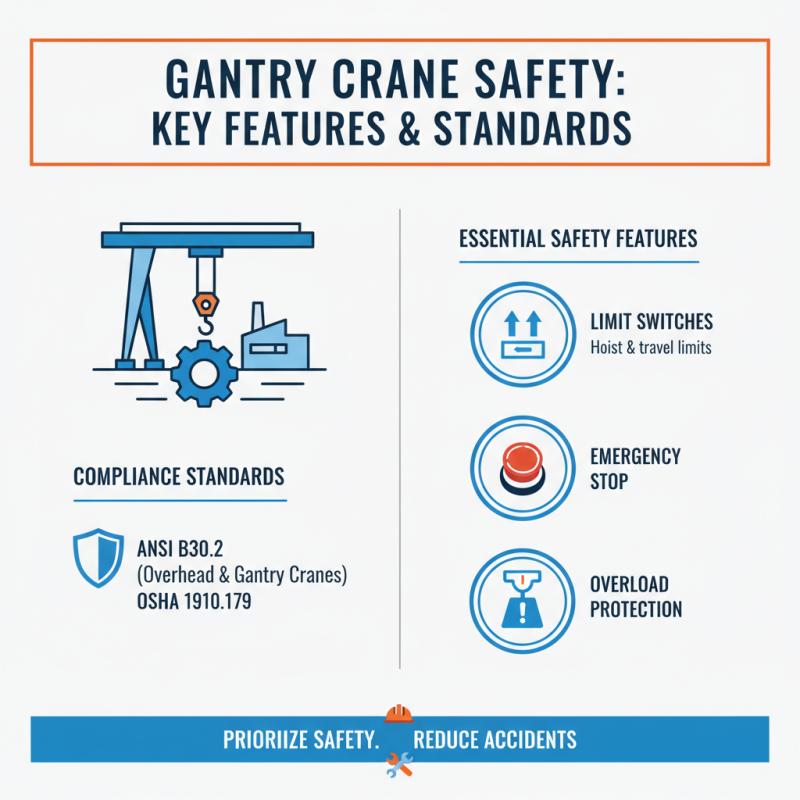
When selecting a gantry overhead crane, safety features and compliance standards are paramount. According to the American National Standards Institute (ANSI), the design and manufacturing of these cranes must meet specific safety guidelines. For instance, overhead cranes should feature limit switches, emergency stop buttons, and overload protection devices. These components can significantly reduce accidents, enhancing workplace safety.
It's essential to consider compliance with Occupational Safety and Health Administration (OSHA) regulations. OSHA mandates regular inspections and maintenance to ensure cranes operate safely. Neglecting these can lead to severe penalties and increased risk of injury. A study by the National Safety Council highlights that almost half of all crane-related accidents stem from equipment failure or improper use.
**Tips:** Always check the crane's load ratings and ensure they align with your operational needs. This simple step can prevent dangerous overloading situations. Training operators on safety protocols is equally vital. Employees should understand how to recognize risks associated with crane operation. Regular safety drills can reinforce this knowledge and foster a safety-first culture.
Cost Analysis and Return on Investment for Gantry Crane Systems
When considering gantry cranes, cost analysis is crucial. According to a report by the Industrial Truck Association, overhead crane systems can significantly affect operational efficiency. A typical gantry crane has an initial cost ranging from $5,000 to $100,000. Factors influencing costs include size, load capacity, and customization options. Businesses need to weigh these costs against potential benefits.
Return on investment (ROI) is another essential factor. Data shows that effective gantry crane systems can enhance productivity by up to 30%. In industries like manufacturing, downtime costs can reach $1,000 per hour. Investing in a reliable gantry crane could reduce such losses. However, maintenance costs and the crane's lifespan must also be considered. These elements can add unexpected expenses, complicating ROI calculations.
Ultimately, choosing the right gantry crane is not straightforward. Some businesses may overlook factors like installation costs. It’s critical to ensure the crane meets specific operational needs. A poorly chosen system can lead to inefficiencies and safety issues. Therefore, a thorough evaluation of costs, ROI, and operational requirements is vital.