How to Choose the Right Garage Overhead Crane for Your Needs?
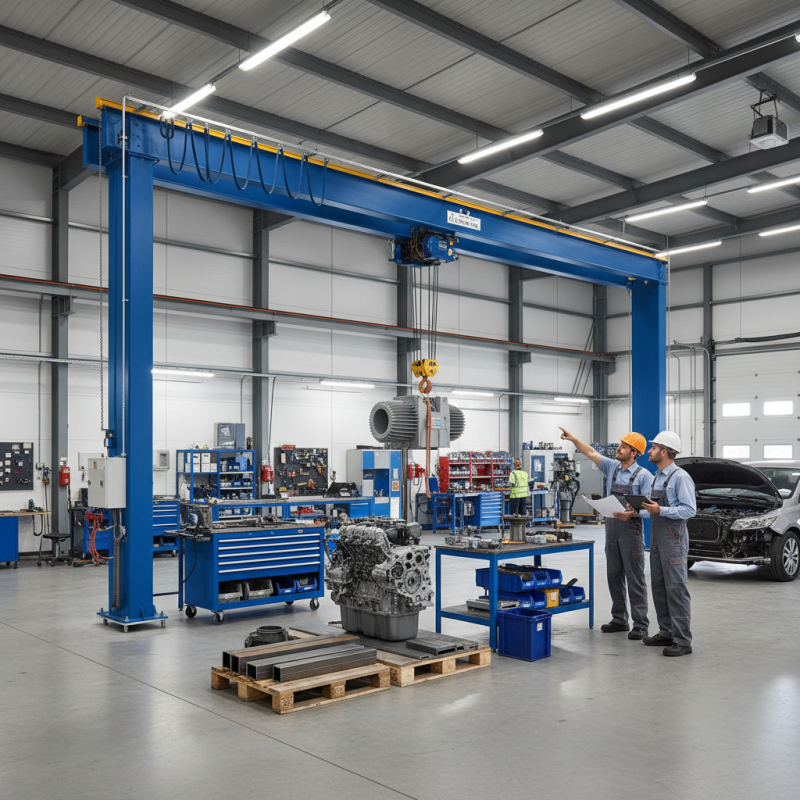
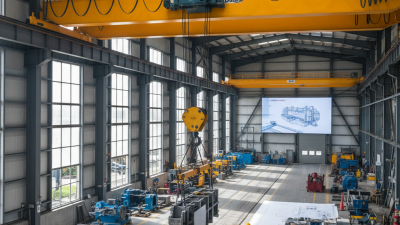
Choosing the right Garage Overhead Crane can be a daunting task. With various options available, it is essential to understand your specific needs. Factors like weight capacity, span length, and height limitations matter. A well-selected crane can enhance productivity and safety in your workspace.
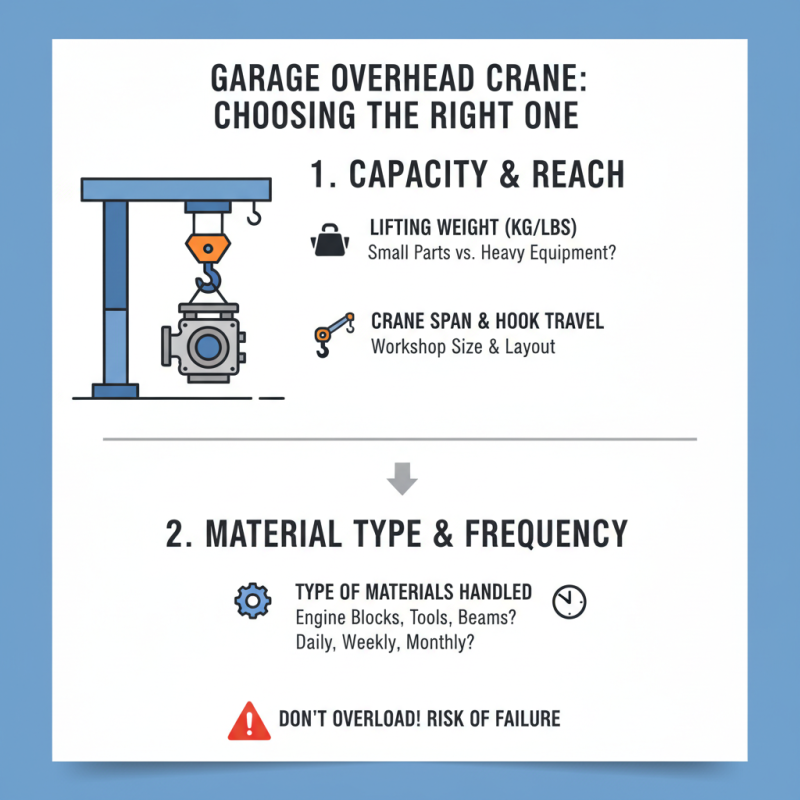
Consider the type of materials you'll be handling. Different cranes are designed for different weights and sizes. You might need a model that suits both small and large loads. Think about the layout of your garage as well. Space constraints could limit your options, or perhaps inspire creative solutions.
Mistakes can happen if you rush into a decision. Sometimes, a crane that looks appealing may not meet your actual requirements. Reflecting on your current tasks is crucial. This way, you can avoid regrets later on. A Garage Overhead Crane is an investment, so take your time to choose wisely.
Understanding Your Lifting Needs and Requirements
When choosing a garage overhead crane, it is crucial to clearly understand your lifting needs and requirements. Start by determining the weight of the loads you intend to lift. Industry statistics indicate that improper weight assessment can lead to accidents or equipment overload. The Occupational Safety and Health Administration (OSHA) reports that roughly 38% of crane incidents stem from lifting exceeding capacity. Monitor the maximum load you need to handle when selecting a crane.
Next, consider the available space in your garage. Overhead cranes come in different sizes and configurations. Some businesses mistakenly underestimate their space requirements, limiting their crane's effectiveness. According to a report by the Hoisting and Rigging Safety Committee, poor space management can reduce operational efficiency by up to 20%. Before purchasing, measure your workspace accurately. Identify obstacles that might hinder movement or operation.
Lastly, think about the frequency of use. Will the crane be a daily tool or an occasional helper? A study showed that 65% of facilities often choose under-capacity cranes, affecting productivity. It’s essential to balance the initial investment with long-term needs. Reflect on how operational demands might evolve over time, as this can inform your decision-making process. Always remember that adaptability plays a key role in selecting the right overhead crane.
Types of Garage Overhead Cranes Available on the Market
When choosing a garage overhead crane, it’s important to understand the different types available. These cranes vary in design and function. Some are suited for light lifting, while others can handle heavy loads.
Electric overhead cranes are popular for their efficiency. They allow smooth lifting with minimal manual effort. However, installation can be tricky. Make sure your garage has the necessary structure. Otherwise, you might face complications later.
Another option is the manual overhead crane. They are less expensive and easier to operate. Yet, they require more physical effort. This can be challenging for some users. Lastly, consider portable cranes. They offer flexibility, but their load capacity is often limited. Each type has its pros and cons, and it’s essential to evaluate your specific needs carefully.
Key Specifications to Consider When Selecting a Crane
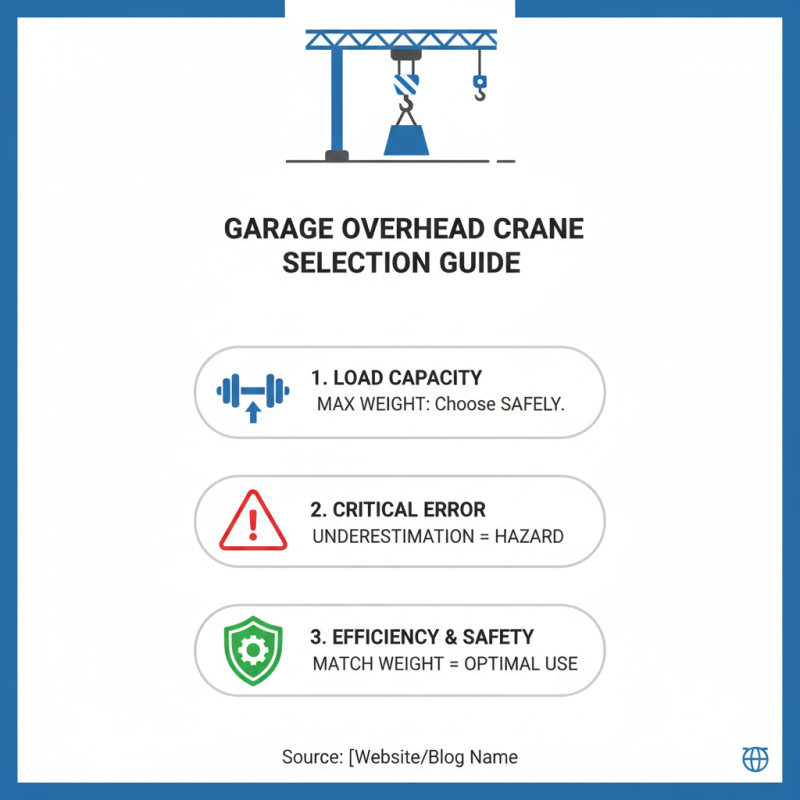
When selecting a garage overhead crane, key specifications play a crucial role. Start with the load capacity. Consider the maximum weight you'll lift. It’s vital to choose a crane that can handle your heaviest items efficiently. A common mistake is underestimating this factor, which can lead to safety hazards.
Next, think about the span length. This refers to the distance between the support structures. If your workspace is limited, a crane with a shorter span might be necessary. However, longer spans facilitate better maneuverability. Be aware that not all garages can accommodate long spans without proper infrastructure.
Additionally, evaluate the lifting height. This is essential if you have tall items or need to stack materials. If the height isn’t sufficient, operations may be hindered. It's also worth considering the type of controls. Manual versus electric controls will impact ease of use and safety. Reflecting on these specifications will lead to a well-informed choice.
Installation and Maintenance Considerations for Your Crane
When installing a garage overhead crane, consider the space and load capacity. The crane should fit your existing layout. Many facilities report that improper sizing can lead to accidents. According to industry surveys, 30% of crane operators encountered challenges due to space constraints. Adjustments and modifications may be necessary.
Maintenance is equally crucial. Regular inspections help ensure safety and efficiency. Commonly, maintenance staff must check for wear and tear every three months. However, only about 40% of companies adhere strictly to this schedule. Many operators overlook small issues until they escalate.
Training is vital for operators. Proper training can lead to a 40% reduction in accidents. Yet, a shocking 50% of crane operators receive minimal training. Investing time in education pays off in the long run. Facilities with well-trained staff report higher productivity and fewer incidents. The importance of installation and maintenance cannot be overstated.
How to Choose the Right Garage Overhead Crane for Your Needs?
| Crane Type |
Load Capacity (tons) |
Span Lengths (ft) |
Power Source |
Maintenance Frequency |
| Single Girder |
1 - 10 |
10 - 40 |
Electric |
Monthly |
| Double Girder |
5 - 20 |
20 - 60 |
Electric or Diesel |
Quarterly |
| Jib Crane |
0.5 - 5 |
8 - 20 |
Electric |
Biannual |
| Portable Crane |
0.5 - 3 |
5 - 15 |
Manual or Electric |
Annually |