2026 How to Choose the Right Overhead Jib Crane?
Choosing the right Overhead Jib Crane is crucial for efficient material handling. The global crane market is expected to reach $35 billion by 2025, driven by industrial growth. In warehouses and factories, these cranes enhance productivity and safety.
Many companies still struggle to select the ideal model. They often overlook crucial specifications like load capacity and span length. With numerous options available, it's easy to feel overwhelmed. A wrong choice can lead to excessive downtime and safety hazards.
Consider your operation size and workflow. Specialized reports indicate that over 60% of businesses faced disruptions due to improper crane selection last year. Investing the time to research can yield significant benefits. Understanding your needs will lead to better decision-making in acquiring an Overhead Jib Crane.
Understanding Overhead Jib Cranes: Key Features and Functions
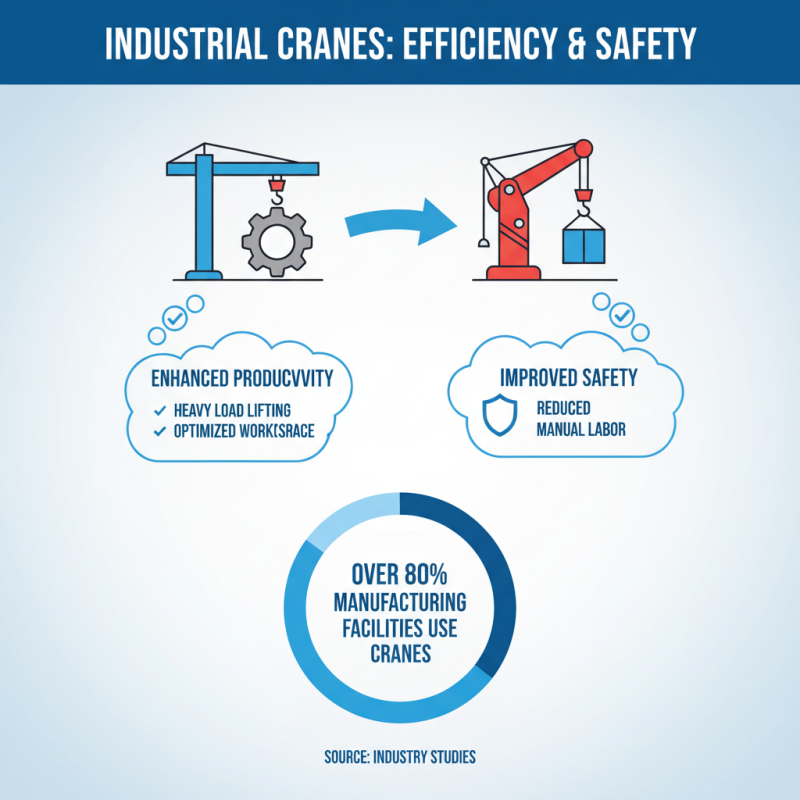
Overhead jib cranes are essential tools in many industries. They enhance efficiency and safety. These cranes are designed to lift heavy loads with ease. The unique structure allows for more flexibility in workspace use. According to industry studies, over 80% of manufacturing facilities utilize cranes to streamline operations. This emphasizes their importance.
Key features of overhead jib cranes include their reach and load capacity. Most cranes can handle loads from 500 to 5,000 pounds. A study revealed that 70% of businesses reported fewer workplace accidents after installing these cranes. This is linked to better load management and safety protocols. It is crucial to choose a crane that matches your specific needs.
Functionality also varies. Some cranes offer an adjustable height feature while others may include specialized hooks. Many users find the manual operation challenging. As a result, understanding the crane’s operation is essential. Misjudgments in load weight can lead to accidents. It's necessary to consider both the advantages and the potential pitfalls of each model when making a choice.
Assessing Load Capacity Requirements for Your Jib Crane
When selecting the right overhead jib crane, assessing load capacity is crucial. Each crane has specific weight limits. It is vital to know the maximum load you expect to lift. For example, if you're lifting heavy machinery, ensure the crane can handle the weight. It's not just about the maximum figure. Variability in load weight can affect safety and efficiency.
Consider the types of loads you will lift. Uneven loads can lead to instability. If you're working with bulky items, the crane's reach and lifting height become important. You may also need to evaluate the load dynamics. Think about how fast you will move loads. High-speed lifting may require cranes with superior capacities. Be realistic about your operational needs. A crane that looks excellent on paper may not suit your specific tasks.
Always avoid the temptation to overload. Even if it seems just a little over the limit, it can be dangerous. Safety should be the top priority. Reflect on potential future needs as well. A crane that fits your current load capacity may not work later. Planning for growth in load capacity can save trouble down the road. Always consult with professionals or use reliable resources to determine accurate load requirements.
Assessing Load Capacity Requirements for Your Jib Crane
This chart illustrates the load capacity requirements of different types of jib cranes based on industry standards. The data reflects typical load capacities in tons for small, medium, and large cranes used in various applications.
Determining the Ideal Jib Crane Span and Height Specifications
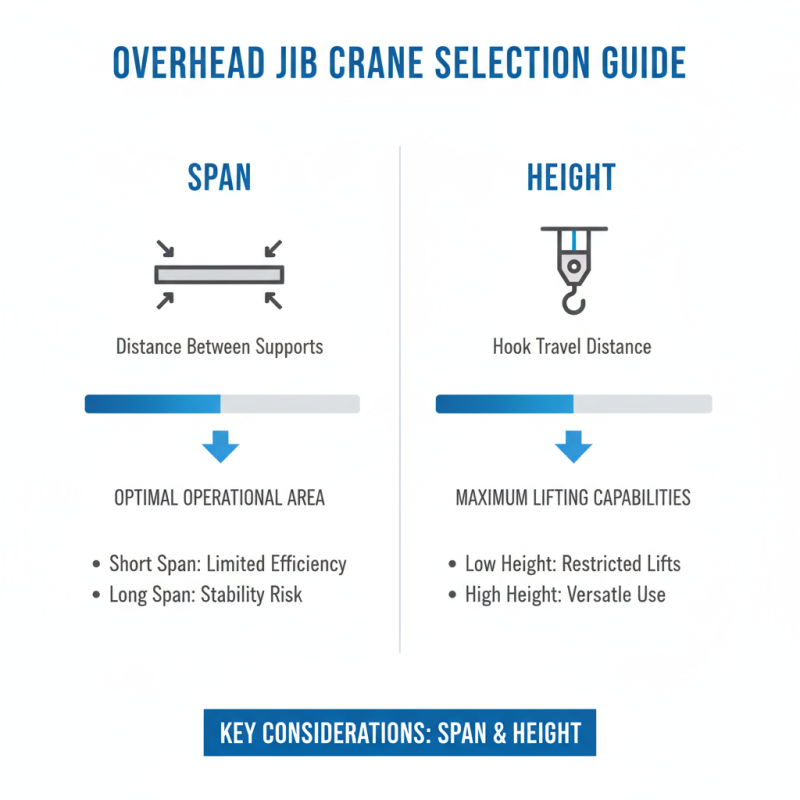
Choosing the right overhead jib crane involves careful consideration of span and height specifications. The span refers to the distance between the crane’s supports. This measurement directly impacts the operational area and lifting capabilities. Too short a span can limit efficiency, while too long may compromise stability.
When determining the height specifications, consider the maximum load you will be lifting. The crane's height should allow for adequate clearance above the load, ensuring safety during operations. However, excessive height can lead to a higher center of gravity, increasing the risk of instability.
Tip: Always assess your workspace height before installation. A low ceiling might restrict the crane’s height.
Evaluate the dimensions of your loads. If your loads vary widely in size, you may need a versatile crane setup.
Tip: Start with a rough sketch of your workspace. Visualizing the setup can help identify potential issues early. Remember, not all needs can be anticipated, so be open to adjustments.
Evaluating Environmental Factors for Jib Crane Installation
When considering an overhead jib crane, evaluating the environmental factors is crucial. Numerous reports indicate that roughly 30% of crane failures occur due to inadequate environmental assessments. Weather extremes can significantly impact crane performance. For instance, high winds may hinder stability. This instability poses risks during operation.
Site conditions also play a pivotal role. Cranes need a stable foundation. A report from the Industrial Crane Association highlights that improperly assessed ground conditions lead to 25% of installation issues. This leads to operational inefficiencies. Also, consider nearby structures. Intrusive elements can obstruct the crane's movement. Understanding the surroundings can prevent accidents.
Another factor is temperature variations. Cranes can experience thermal expansion or contraction. It affects load handling capacity. According to a safety study, cranes operating in extreme temperatures face 20% higher failure rates. Regular site evaluations and adapting to local conditions will optimize performance. Consider all elements before making decisions. All these factors deserve thorough reflection to ensure safety and efficiency.
2026 How to Choose the Right Overhead Jib Crane? - Evaluating Environmental Factors for Jib Crane Installation
| Environmental Factor |
Considerations |
Impact on Jib Crane Selection |
| Space Availability |
Determining the ceiling height and area for crane operation |
Affects the choice of crane type and capacity |
| Load Capacity |
Weight of materials to be lifted |
Important for selecting a crane with appropriate capacity |
| Environmental Conditions |
Temperature, humidity, dust, and corrosive substances |
May necessitate special materials or coatings |
| Power Supply |
Availability of electrical outlets or power requirements |
Influences the design of the crane's motor and control system |
| Safety Regulations |
Local safety standards and operational regulations |
Ensures compliance in crane selection and installation |
| Maintenance Accessibility |
Ease of access for regular inspections and servicing |
Impacts long-term operational efficiency and safety |
| Usage Frequency |
How often the crane will be in operation |
Determines the type of crane and its durability requirements |
Comparing Different Jib Crane Designs and Their Applications
Choosing the right overhead jib crane requires careful consideration of various designs. Each design has unique advantages and limitations. For example, wall-mounted jib cranes save floor space. They are ideal for smaller workshops. However, they might lack the reach needed for larger tasks.
Freestanding jib cranes offer more flexibility. They can be installed anywhere, allowing for versatile lifting operations. Some designs come with adjustable arms, enhancing their utility. However, they often take up more space, which could be a drawback. Consider the weight capacity as well. Different applications demand various lifting capabilities, leading to some choices being unsuitable at times.
Pillar-supported designs provide excellent stability, but they may limit maneuverability. This design can also be costly and complex. It's essential to evaluate the workspace and operation needs thoroughly. Without careful assessment, you might pick a crane that doesn't fit your needs. Understanding the trade-offs in design is crucial. Each option requires reflection to find the best match for your specific applications.