Why Choose a Double Girder Crane for Your Industrial Needs?
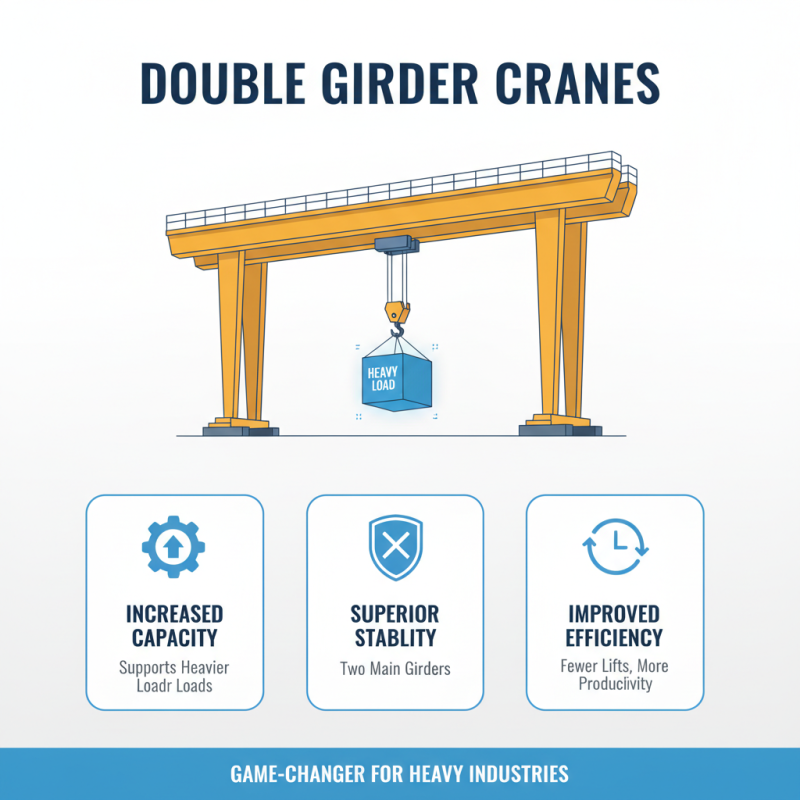
When it comes to industrial lifting solutions, a Double Girder Crane stands out for its reliability and versatility. This type of crane features two horizontal beams, providing enhanced stability and load-bearing capacity. Industries often rely on this equipment to handle heavy loads effectively.
Double Girder Cranes are designed for various environments, from warehouses to manufacturing facilities. They can be customized for specific tasks, making them a popular choice among businesses. Many operators appreciate the smooth functionality of these cranes. However, it’s essential to consider their weight and complexity during installation.
Despite their advantages, users must reflect on proper training and maintenance. A poorly trained operator can compromise safety. Regular checks are vital to ensure long-term performance. The investment in a Double Girder Crane pays off through improved productivity and safety when managed correctly.
Benefits of Double Girder Cranes in Heavy Material Handling
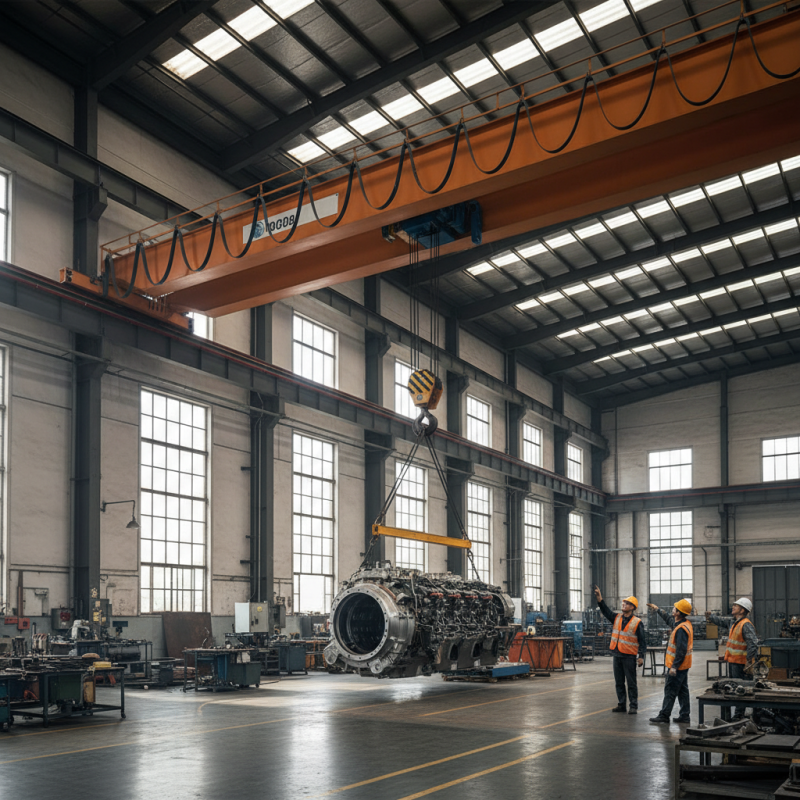
Double girder cranes are essential in heavy material handling. They provide superior stability and strength. This is crucial when moving large loads. These cranes feature two bridge girders, which distribute weight more effectively. As a result, they can handle heavier items with ease. This design leads to less stress on the lifting mechanisms.
Operators often appreciate the increased height and span of double girder cranes. They allow for better clearance and flexibility in warehouse spaces. However, maintenance can be a challenge. The complexity of the design may require more frequent checks. It’s important to regularly inspect components for wear and tear. This can help prevent unexpected downtimes.
Energy efficiency is another benefit of double girder cranes. Their construction allows for smoother operation, which can reduce power consumption. Although they may have a higher initial cost, the long-term savings are valuable. However, companies must assess their specific needs and budgets. Investing in the right crane can lead to enhanced productivity. But this does involve careful consideration of operational demands.
Load Capacity and Efficiency: A Comparative Analysis with Other Cranes
When it comes to lifting heavy loads, double girder cranes excel in capacity and efficiency. These cranes consist of two main girders, providing increased stability and strength. They can support heavier loads compared to single girder cranes. For industries that handle large materials, this can be a game-changer. The higher load capacity reduces the need for multiple lifts, improving overall productivity.
Of course, it's essential to consider the specifics. Double girder cranes typically have more intricate designs, which can lead to higher maintenance costs. They may also require more space for operation. For smaller workshops, this might not be practical. Yet, their efficiency in handling substantial weights often outweighs these drawbacks in larger facilities. In a complex industrial environment, every choice matters.
Another point of reflection is energy consumption. While double girder cranes can lift more, they often use more power. This can lead to higher operational costs over time. A detailed analysis is necessary to balance capacity needs with energy efficiency. In many cases, investing in more robust technology yields significant returns in productivity and safety. Therefore, weighing options is crucial for the right decision.
Design Versatility: Customization Options for Various Industrial Applications
Double girder cranes offer remarkable design versatility for various industrial applications. With their robust structure, they can handle heavy loads efficiently, reaching capacities over 100 tons. According to industry reports, the global overhead crane market is projected to grow to $4.36 billion by 2026, indicating a rising demand for flexible solutions. These cranes can be customized based on specific needs, such as height, span, and lift speed.
Customization options enhance operational efficiency. Businesses can design their cranes for unique environments. For instance, cranes may need to adapt to tight spaces in manufacturing setups or high verticals in warehouses. Notably, 75% of users express satisfaction with tailored features, according to a study by the Crane Manufacturers Association. However, potential drawbacks exist. Over-customization can lead to increased costs. It may also cause longer lead times, affecting project timelines.
Design flexibility also allows for integration with advanced technology. Users can equip cranes with automation systems, improving safety and efficiency. Data from recent surveys show that automation can reduce labor costs by up to 30% in some industries. Despite these advantages, companies must carefully evaluate their specific needs versus the complexities that added features may introduce.
Why Choose a Double Girder Crane for Your Industrial Needs?
This chart illustrates the key features and capabilities of double girder cranes, highlighting their strong load capacities, various span lengths, height clearances, operational speeds, and customization options available for diverse industrial needs.
Safety Features and Standards in Double Girder Crane Technology
When considering a double girder crane, safety is a primary concern. These cranes offer advanced safety features that can reduce workplace accidents. For example, many are equipped with overload protection systems. This prevents cranes from lifting weights beyond their capacity. Regular maintenance checks can enhance this safety assurance even further.
In addition to built-in features, double girder cranes meet stringent safety standards. Compliance with industry regulations ensures reliability in various environments. Frequent training for operators also plays a vital role. Employees must understand how to handle unexpected situations. Ignoring this aspect can lead to accidents.
Investing in updated safety technology is crucial. Components like emergency stop buttons are standard. However, their effectiveness depends on operator familiarity. Yet, not all companies prioritize training. This oversight can negate advanced features. Regular assessments and updates are essential to maximize safety.
Why Choose a Double Girder Crane for Your Industrial Needs? - Safety Features and Standards in Double Girder Crane Technology
| Safety Feature |
Description |
Standards Compliance |
Testing Method |
| Overload Protection |
Prevents lifting beyond the crane's capacity. |
OSHA, ANSI B30.2 |
Load tests at various increments. |
| Emergency Stop |
Immediate halt functionality in emergencies. |
ISO 13850 |
Operational checks. |
| Anti-Collision System |
Prevents collisions with other equipment or objects. |
EN 15011 |
Simulation tests. |
| Limit Switches |
Stops the crane at predefined positions. |
ANSI/ASME B30.17 |
Routine inspections. |
| Hoist Brake |
Ensures load retention during operation. |
ISO 4301 |
Performance testing under load. |
Cost-Effectiveness Over Time: Maintenance and Operational Efficiency
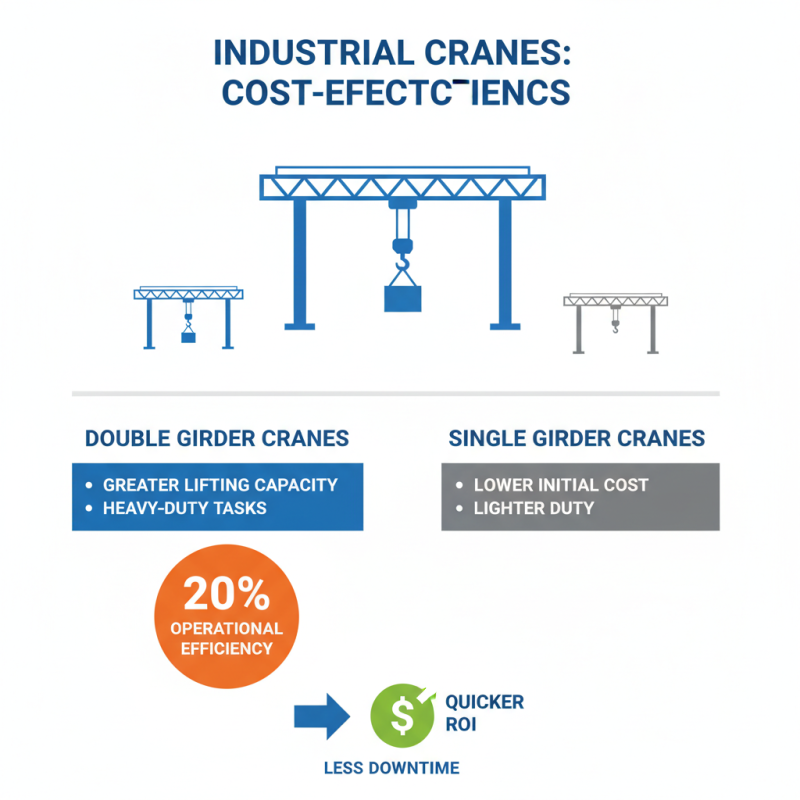
When considering cranes for industrial use, double girder cranes stand out due to their cost-effectiveness over time. These cranes usually offer greater lifting capacity compared to single girder models, making them suitable for heavy-duty tasks. Reports indicate that double girder cranes can improve operational efficiency by nearly 20%. This enhancement often leads to less downtime and a quicker return on investment.
Maintenance plays a vital role in the overall cost-effectiveness of these cranes. Regular maintenance can extend the lifespan of a crane by years, while also ensuring safety. The average maintenance cost for a double girder crane is estimated at 5% of the initial purchase price annually. Many facilities, however, underestimate maintenance expenses, leading to unexpected breakdowns that disrupt operations.
**Tip:** Schedule routine inspections to avoid costly repairs.
In addition, operational efficiency is paramount. Double girder cranes often support faster and smoother operations, which can significantly boost productivity. Yet, it’s crucial to consider the initial investment. Some might find it daunting. Understanding the long-term benefits can help mitigate this. Ignoring the full scope of costs can be a pitfall for some operators.
**Tip:** Factor in total cost of ownership when budgeting for a crane.