Top Double Girder Overhead Crane Features and Benefits Explained?
In the world of material handling, the "Double Girder Overhead Crane" stands out for its strength and versatility. According to industry expert John Smith, "The efficiency of a double girder setup can transform workflow." These cranes offer superior lifting capabilities compared to their single girder counterparts. They can handle heavier loads and span greater distances, making them ideal for diverse applications.
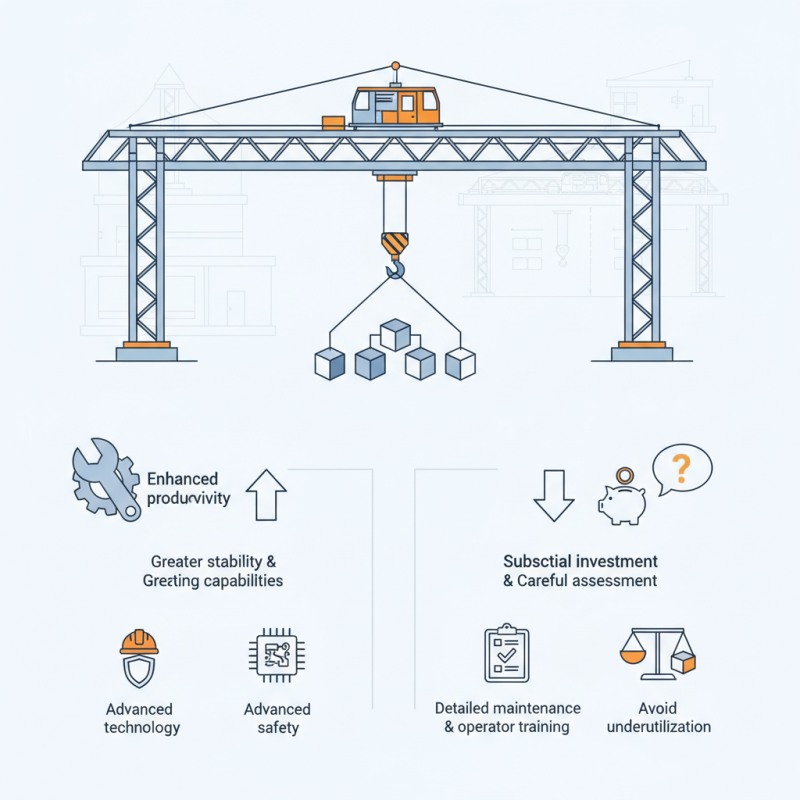
Operating a Double Girder Overhead Crane can enhance productivity. However, these machines require detailed maintenance and operator training. Financially, they represent a more substantial investment. Companies need to assess their specific needs before committing. Some organizations find themselves overestimating their requirements, leading to unnecessary expenditure.
Understanding the unique features of a Double Girder Overhead Crane is essential. They provide greater stability and are often equipped with advanced technology. This can enhance safety and efficiency on the job site. However, not all features may be necessary for every application. Companies must carefully consider their operational demands to avoid underutilizing this powerful equipment.
Overview of Double Girder Overhead Cranes
Double girder overhead cranes are essential in various industries. These cranes have two parallel girders that provide increased stability and lifting capacity. They can handle heavier loads compared to single girder models. According to the International Crane Inspection Association, these cranes can lift up to 200 tons, making them ideal for heavy manufacturing and construction.
The design of double girder cranes allows for better hook height and travel length. This means they can lift materials higher and move them further. Reports indicate that efficiency can increase by up to 40% with the proper crane selection. Operators appreciate this efficiency, but misunderstandings often arise about load limits. Incorrect assumptions can lead to safety risks.
Despite their numerous advantages, double girder cranes have their drawbacks. They may require more maintenance than other types. Operators must routinely check for wear and tear. The complexity of the system can lead to longer downtimes if issues arise. Understanding these factors is crucial for maximizing operational efficiency. Proper training and awareness can enhance safety and performance in the workplace.
Key Features of Double Girder Overhead Cranes
Double girder overhead cranes are powerful tools widely used in various industries. These cranes consist of two girders, which provide extra strength and stability. This design enables them to lift heavy loads with ease. Operators can maneuver larger items without risking damage.
One key feature of double girder cranes is their high lifting capacity. They can handle weights that single girder cranes often cannot. Their robust structure ensures reliable performance, even under challenging conditions. Additionally, these cranes offer better hook height, which maximizes vertical space usage. This feature is particularly beneficial in warehouses and manufacturing facilities.
However, double girder cranes require more space than their single-girder counterparts. This might pose challenges for smaller operations. Operators must consider their workspace carefully. Moreover, while maintenance is crucial, it can also be complex. Regular checks are necessary to avoid costly downtime. Double girder cranes have many advantages, yet they require thoughtful integration into existing systems.
Top Double Girder Overhead Crane Features and Benefits Explained
| Feature |
Description |
Benefit |
| High Load Capacity |
Designed to handle heavy loads efficiently. |
Enhances productivity by enabling the transport of heavier materials. |
| Stability |
Features a robust frame and dual girders for superior stability. |
Minimizes sway, ensuring safer operations. |
| Versatility |
Can be customized for various industrial applications. |
Accommodates a wide range of lifting needs. |
| Enhanced Safety Features |
Equipped with safety devices like overload protection. |
Reduces the risk of accidents in the workplace. |
| Ease of Operation |
User-friendly control systems for simplified operation. |
Increases operator efficiency and reduces training time. |
| Low Maintenance |
Built with durable materials that require less upkeep. |
Reduces downtime and maintenance costs. |
Advantages of Using Double Girder Overhead Cranes
Double girder overhead cranes are highly regarded in industrial settings. Their robust structure allows for heavier loads and greater stability. According to recent industry reports, these cranes can lift capacities up to 100 tons. This makes them ideal for heavy manufacturing and construction applications.
One significant advantage is their increased hook height. They offer more vertical space, accommodating taller loads. This design optimizes workplace efficiency. When running a busy facility, every inch matters. A double girder crane can raise the load to a greater height than single girder models. This space optimization is particularly beneficial for warehouses with multiple floors.
Moreover, double girder cranes provide better responsiveness during operations. They can operate at higher speeds without compromising safety. The improved maneuverability helps in reducing downtime. However, potential users need to consider ongoing maintenance. High-capacity cranes require regular checks. Neglecting maintenance can lead to issues, making it essential for operations to plan accordingly. Balancing performance with maintenance is crucial in maximizing effectiveness.
Advantages of Using Double Girder Overhead Cranes
Applications of Double Girder Overhead Cranes in Industry
Double girder overhead cranes are increasingly vital in various industries. Their robust structure allows for heavy lifting. According to the International Crane Association, these cranes can handle loads ranging from 10 to over 100 tons. This capability makes them essential in sectors like manufacturing, construction, and warehousing.
In the manufacturing sector, double girder cranes excel in efficiency. They minimize downtime and maximize productivity. Automotive factories often utilize these cranes to transfer heavy engine parts between assembly lines. A report by the Global Manufacturing Alliance states that these cranes improve workflow by 25%.
However, reliance on heavy-duty cranes has its own challenges. Maintenance can be costly and intricate. Some facilities struggle to find trained personnel for repairs. A study by Industry Insights highlighted that up to 15% of crane downtime is due to maintenance issues. Organizations need to invest in training to mitigate these operational risks.
Maintenance Considerations for Double Girder Overhead Cranes
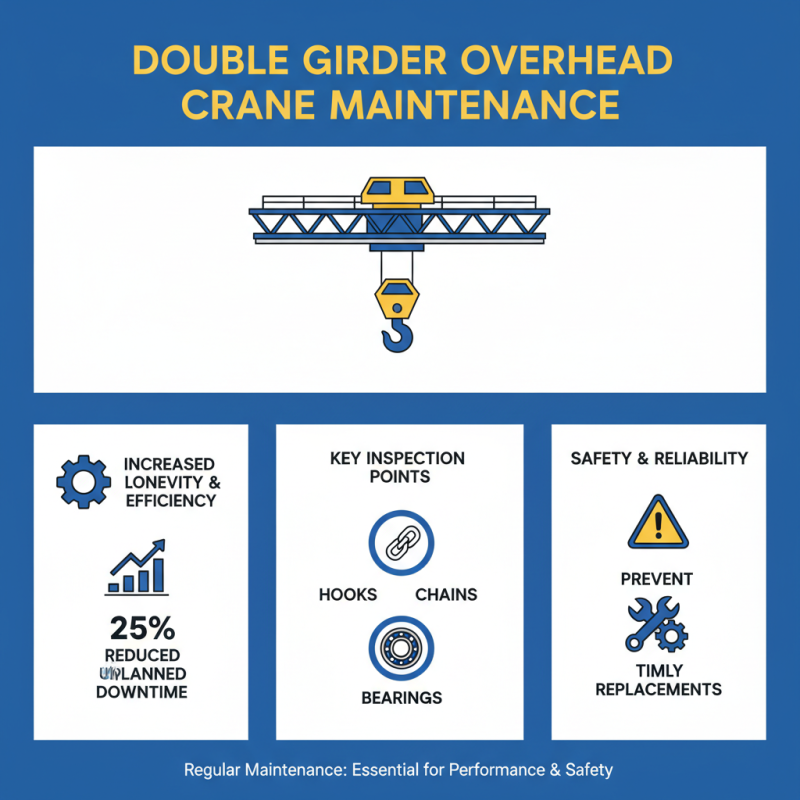
Maintenance of double girder overhead cranes is crucial for their longevity and efficiency. Studies show that regular maintenance can reduce unplanned downtime by up to 25%. Operators should focus on inspecting critical components first: hooks, chains, and bearings. Many accidents are linked to worn-out parts. Therefore, timely replacements can prevent serious incidents.
Lubrication is often underestimated. A comprehensive lubrication schedule helps maintain performance and extend lifespan. Neglecting this step might lead to increased friction and wear. One overlooked area is electrical connections. Regular checks can prevent failures. Data from industry reports suggest that up to 40% of crane failures are electrical issues.
Recordkeeping is essential. Maintenance logs provide insight into performance trends. They can help identify patterns that need addressing. An effective logging system can lead to better decision-making. It ensures that no essential task is overlooked. However, keeping accurate records is sometimes challenging. Workers may forget to log certain tasks, leading to gaps in maintenance history.