What is a Single Girder Crane and Its Benefits for Buyers?
A Single Girder Crane is a popular choice in various industries, offering efficient lifting solutions. According to a report by MarketsandMarkets, the global crane market is projected to reach $52.7 billion by 2025, with single girder cranes contributing significantly to this growth. These cranes are designed with a single girder framework, making them lightweight yet sturdy. This design allows for a reduction in manufacturing costs and installation time.
Businesses benefit from Single Girder Cranes in multiple ways. They require less space compared to other crane types, making them ideal for tight production areas. Their lower operational costs enhance overall profitability. Additionally, they can lift loads efficiently, increasing productivity on the worksite. However, buyers must consider load capacity, height requirements, and durability, reflecting on specific application needs.
While the advantages are clear, potential buyers should remain cautious. Not all single girder cranes are suited for every task. Their limitations in handling heavier loads need consideration. Evaluating your specific requirements will help avoid costly mistakes and ensure you make an informed decision. Striking a balance between cost, efficiency, and application is essential when choosing the right Single Girder Crane for your operations.
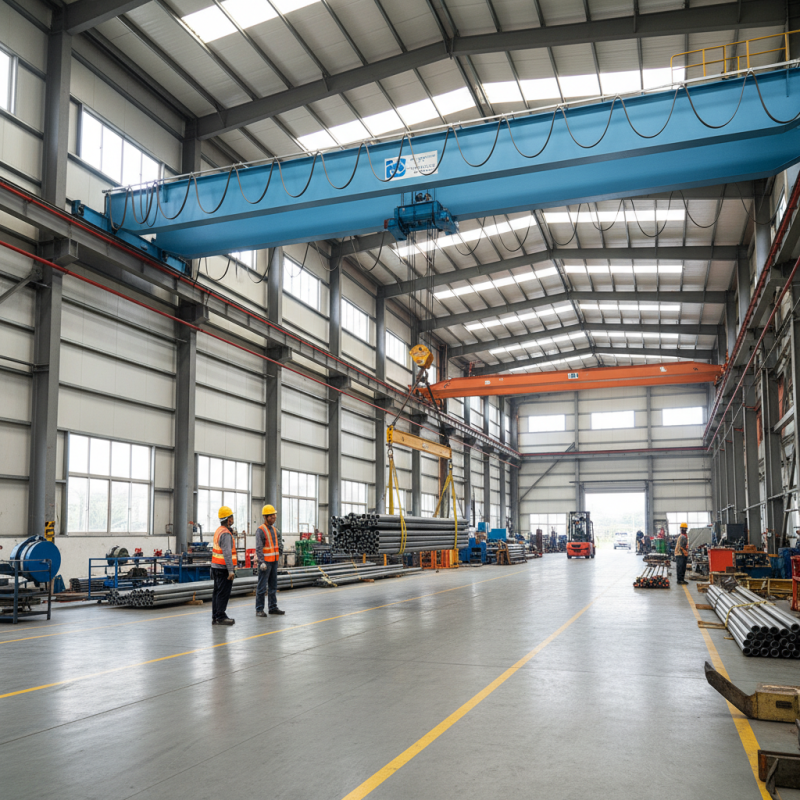
What is a Single Girder Crane?
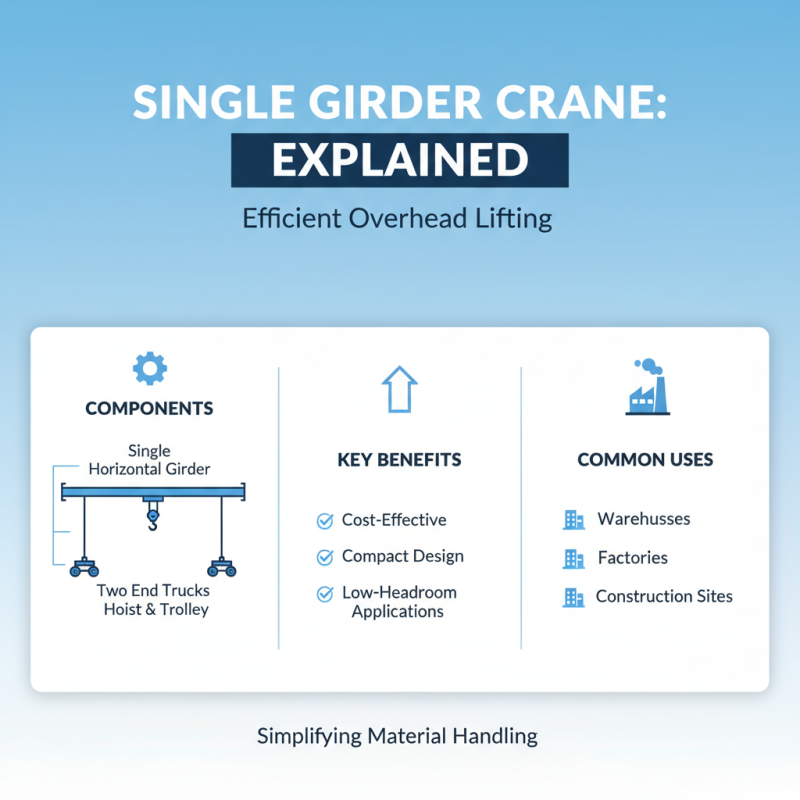
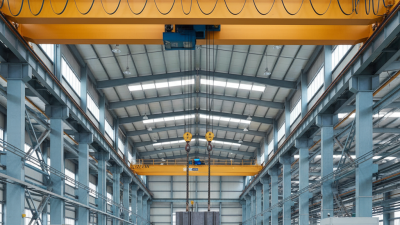
A single girder crane is a type of overhead crane. It consists of one horizontal beam, or girder, supported by two end trucks. This design allows for efficient lifting and transporting of materials across a facility. Single girder cranes are commonly used in warehouses, factories, and construction sites. Their compact design makes them ideal for low headroom applications.
One major benefit of single girder cranes is their lightweight structure. This results in reduced installation costs and lower operational expenses. A single girder crane typically requires less maintenance than larger cranes. This aspect makes it appealing for buyers looking for cost-effective solutions. However, users should consider load capacity before deciding on a crane type.
Tips: Always assess your specific lifting needs. Measure the work area height and weight requirements. It’s wise to consult with experts. They can help you choose the right crane and avoid potential mistakes.
Choosing the right crane isn’t just about cost. Factors like safety features and ease of operation are also crucial. Single girder cranes can sometimes be overlooked for larger options, but they serve many applications well. Understanding your operational requirements is essential for making an informed decision.
Key Features of Single Girder Cranes
Single girder cranes are an essential tool in various industries. These cranes are designed to handle lighter loads efficiently. Their structure is simple yet effective, making them a popular choice for warehouses and factories.
Key features of single girder cranes include their compact design and lower overall height. This allows them to operate in spaces where larger cranes cannot fit. They often use a single beam to support the hoist, reducing the weight of the entire setup. This feature makes installation and maintenance easier, providing convenience for users. Additionally, single girder cranes can be customized for specific applications, enhancing their flexibility.
Another important aspect is their cost-effectiveness. Compared to double girder cranes, single girder models generally have a lower purchase price. However, they may have limitations regarding the maximum load capacity. Buyers should carefully assess their lifting needs before deciding. Attention to detail in design and operational requirements can lead to better choices. Overall, these cranes offer a great balance of functionality and affordability for many businesses.
Advantages of Using Single Girder Cranes for Buyers
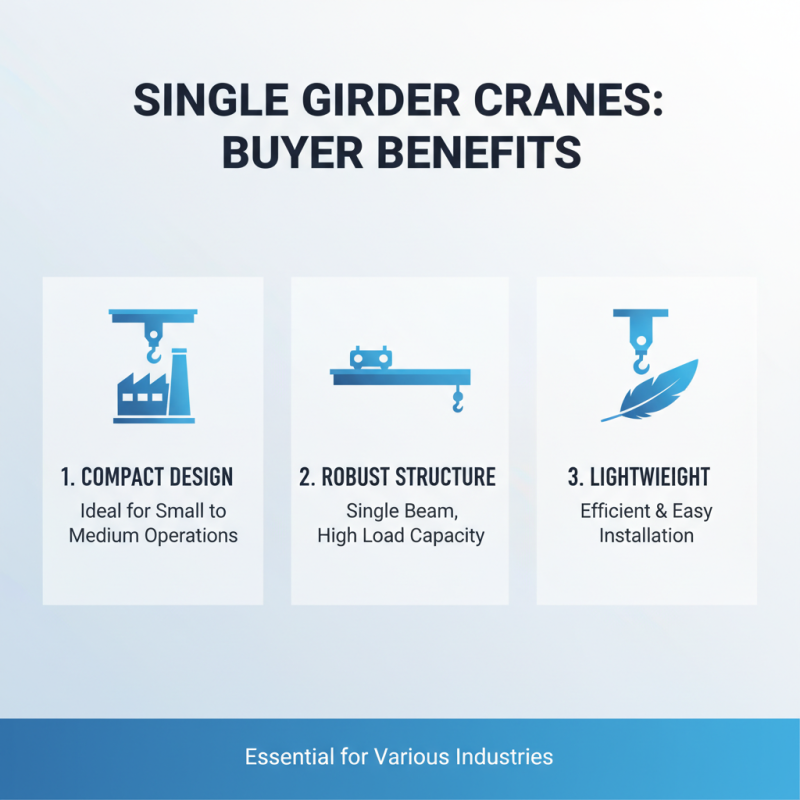
Single girder cranes are essential for various industries. They offer a compact design, making them suitable for small to medium-sized operations. These cranes consist of a single beam supporting the hoist mechanism. This structure allows for high lifting capacities while remaining lightweight.
One significant benefit for buyers is cost efficiency. Single girder cranes typically require less material, reducing overall construction costs. Their simpler design also leads to easier installation and less maintenance. This translates to lower operational downtime. Moreover, they require less space, allowing for better utilization of the available area.
Additionally, single girder cranes can be customized to meet specific operational needs. This flexibility can lead to enhanced productivity. However, it’s crucial for buyers to consider the load capacities and height restrictions. Making informed decisions based on their unique requirements ensures optimal use. Balancing performance with safety is vital for successful operations.
Applications of Single Girder Cranes in Various Industries
Single girder cranes are widely used across various industries due to their unique advantages. These cranes are simple yet effective in lifting and moving heavy loads. Their design allows for maximum efficiency in limited spaces. Many manufacturing facilities utilize these cranes for material handling. They help reduce workforce strain and enhance productivity.
In construction, single girder cranes come in handy for moving construction materials. They can support loads quickly, making project timelines more manageable. Warehouses also rely on these cranes for effectively stacking and retrieving goods. Their compact structure fits seamlessly into small work areas. This efficiency is crucial in high-paced environments where space is at a premium.
While they offer clear benefits, there are challenges as well. Users must consider weight limits carefully to avoid overloading. Misjudgments can lead to accidents or equipment failure. Regular maintenance is essential to ensure safe operation. Workers should be trained thoroughly to mitigate these risks. Proper training helps maximize the potential of single girder cranes while reducing workplace incidents.
Applications and Benefits of Single Girder Cranes
Cost Considerations and Investment Benefits of Single Girder Cranes
Single girder cranes are a cost-effective choice for many industries. Their design allows for efficient lifting and moving of materials. These cranes are generally lighter and require less support structure compared to their double girder counterparts. This can lead to significant savings in construction and installation costs.
In terms of investment benefits, single girder cranes offer a good return. They can reduce operational costs due to lower energy consumption. Moreover, maintenance is often simpler and less frequent, which saves time and money. Buyers must consider their usage needs carefully. For operations with lighter loads and frequent use, the benefits are clear. However, if the load requirements fluctuate, a more versatile option may be necessary.
The initial cost savings of a single girder crane can be appealing. Yet, it's essential to evaluate the long-term implications. What works now may not suit future demands. Decisions should balance current needs with potential growth. Investing wisely ensures that the crane serves effectively over time, minimizing the risk of needing an upgrade or replacement too soon.
What is a Single Girder Crane and Its Benefits for Buyers? - Cost Considerations and Investment Benefits of Single Girder Cranes
| Feature |
Description |
Cost (USD) |
Benefits |
| Capacity |
Typically ranges from 1 to 20 tons |
5,000 - 20,000 |
Suitable for light to medium loads |
| Span |
Commonly spans up to 30 meters |
Variable |
Adaptable for various facilities |
| Height |
Can be customized based on ceiling height |
N/A |
Maximizes vertical space |
| Maintenance Costs |
Generally low due to simpler design |
1,000 - 2,500 annually |
Cost-efficient over lifespan |
| Energy Efficiency |
Designed for low energy consumption |
Variable |
Reduces operational costs |
| Safety Features |
Equipped with overload protection and emergency stops |
N/A |
Enhances workplace safety |