Top 10 Overhead Crane Parts You Need to Know About?
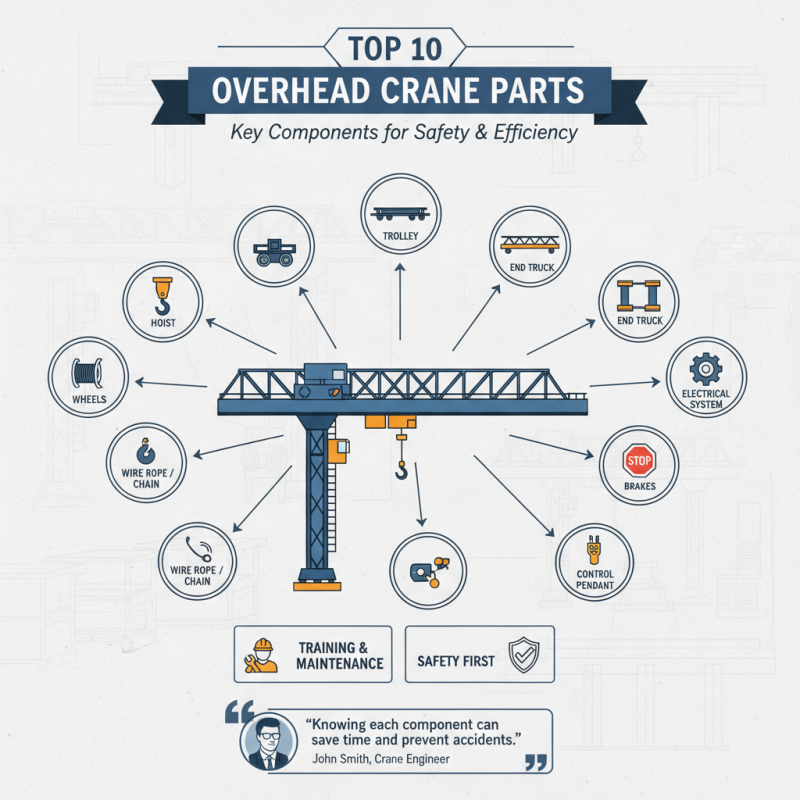
In the world of industrial operations, understanding overhead crane parts is crucial. John Smith, a leading expert in crane engineering, emphasizes this point: "Knowing each component can save time and prevent accidents." These machines play a vital role in warehouses and manufacturing plants, where heavy lifting is routine.
Overhead cranes consist of numerous parts. Each component ensures smooth operation and safety. For instance, the hoist is pivotal in lifting loads efficiently. Similarly, the trolley moves loads horizontally, providing versatility. Understanding these aspects of overhead crane parts not only improves safety but also prolongs the equipment's lifespan.
It's important to note that familiarity with these parts isn't always enough. Operators must receive proper training. Mistakes can happen, leading to costly downtimes or dangerous situations. Regular maintenance is also essential. Thus, staying informed about overhead crane parts is not just a recommendation—it's a requirement for safety and efficiency in industrial environments.
Overview of Overhead Crane Components
Overhead cranes are vital in various industries, ensuring efficient material handling. Understanding their key components can enhance safety and operational efficiency. Some critical parts include the bridge, hoist, trolley, end trucks, and control systems. The bridge supports the entire crane, distributing weight evenly. The hoist lifts and lowers loads, while the trolley moves them horizontally.
According to industry reports, proper maintenance can extend the lifespan of crane components by up to 30%. Regular inspections of the hoist and control systems are essential. Small damages can lead to significant issues. Evaluate the condition of wires and hooks to prevent accidents.
A major concern is the wear and tear on moving parts. Heavy usage can lead to mechanical failures. Monitoring the trolley and end trucks regularly can mitigate risks. Timely replacement of worn-out parts is crucial. Always consult with experts for guidance on complex repairs. Improve your knowledge of component specifications for better decisions in procurement and maintenance.
Importance of Each Overhead Crane Part
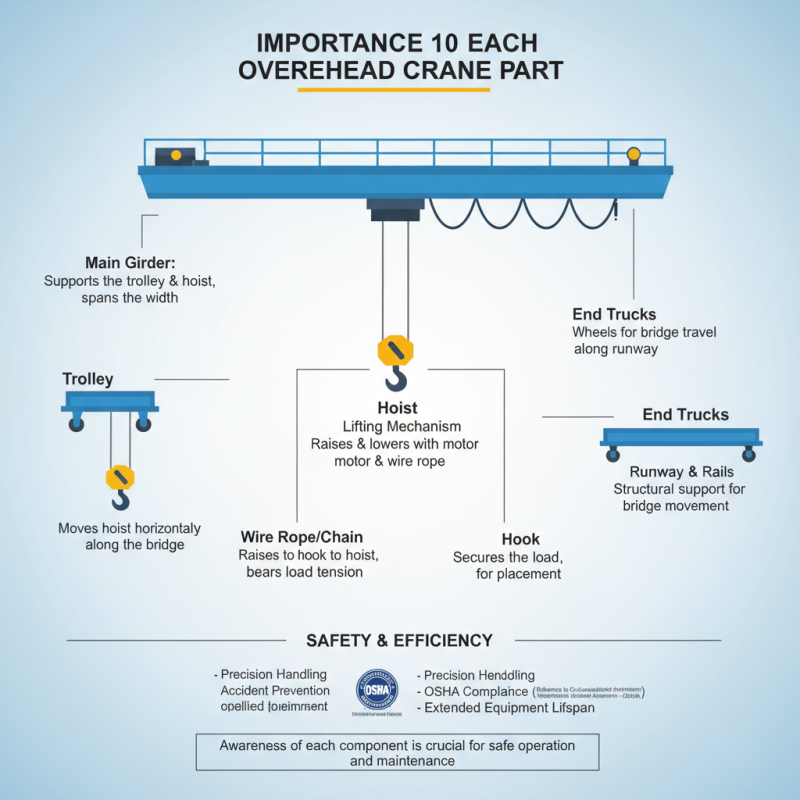
Overhead cranes are pivotal in various industries, handling heavy loads with precision. Understanding each part's significance enhances safety and efficiency. According to the Occupational Safety and Health Administration (OSHA), improper maintenance can lead to accidents, emphasizing the need for awareness of each component.
The hoist is the heart of the crane. It raises and lowers loads. A malfunction can halt operations and cause workplace accidents. The trolley moves along the beam, crucial for precise positioning. Its failure can lead to significant downtime. The bridge is the structure that supports everything. Regular inspections are vital to maintain its integrity and ensure safety.
Moreover, the controls, including pushbuttons and pendant controls, are essential for operational safety. They allow the operator to adjust movements quickly. Ignoring the importance of training on these controls can result in costly mistakes. Each part of the overhead crane plays a role in maintaining a safe working environment. Understanding these elements is not just beneficial; it is essential for operational success.
Detailed Functionality of Crane Hoists
Crane hoists are crucial in lifting operations across various industries. They can lift heavy loads efficiently and safely. Understanding their functionality helps in ensuring operational safety. According to the latest industry reports, nearly 60% of crane incidents result from improper hoisting practices. This highlights the importance of having a well-functioning hoist.
A crane hoist typically consists of several core components. The motor drives the hoist, while the drum holds the lifting cable. The cable connects to the load, allowing for easy movement. Regular maintenance of these components is vital. Studies suggest that over 30% of equipment failures stem from inadequate maintenance practices. This often leads to costly downtime and potential hazards.
Additionally, safety features such as limit switches and brakes can significantly enhance operational reliability. Limit switches prevent overloading by automatically stopping the hoist if it exceeds weight limits. However, some operators neglect these features, increasing the risk of accidents. Training staff on these functions can mitigate risks. Proper training and maintenance close the gap between efficiency and safety in hoisting operations.
Role of Crane Girders in Load Distribution
Crane girders play a pivotal role in load distribution within overhead cranes. These structural components bear the weight of loads and transfer it efficiently to the crane's supporting framework. Their design and integrity directly affect the performance and safety of the entire system. Girders must be robust yet lightweight, balancing strength with mobility.
The effectiveness of crane girders depends on various factors, such as materials and shape. Steel is a common choice due to its high strength-to-weight ratio. However, selecting the right type of steel is crucial. Poor choices can lead to unexpected failures or reduced operational efficiency. Even minor flaws in girder construction can cause severe issues during operation.
Proper maintenance of crane girders is also essential. Regular inspections help identify wear and tear, ensuring that any potential structural weaknesses are addressed. Operators often overlook this aspect, yet it's vital for safety. Understanding the importance of these components can make a significant difference in minimizing accidents. Ultimately, crane girders are fundamental to ensuring safe and effective load distribution in overhead crane systems.
Top 10 Overhead Crane Parts You Need to Know About
This chart illustrates the importance rating of the top 10 overhead crane parts, highlighting the critical role of crane girders in load distribution and overall crane functionality.
Safety Features in Overhead Crane Systems
Overhead cranes are essential in many industries, but safety should always take precedence. Understanding the safety features in overhead crane systems can prevent accidents and protect workers. Key components include limit switches, which prevent overload conditions. These switches ensure that the crane operates within safe weight limits.
Another critical safety feature is the emergency stop button. This button allows operators to halt the crane immediately during emergencies. It is vital for all personnel to know its location. Alarm systems are also important. These warn operators of potential hazards, such as excessive load or system malfunction.
Operators must be trained in these safety features. Many times, untrained staff fail to utilize these systems effectively. Oversights can lead to accidents and costly damage. Regular checks on safety features are essential, too. A brief inspection can reveal wear or malfunction that could pose risks. Maintaining these systems is as crucial as their implementation.