Why Choose a Telescopic Jib for Your Lifting Needs?
In the realm of lifting equipment, the choice of tools can significantly impact operational efficiency. A Telescopic Jib stands out for its versatility and practicality. As industry expert John Smith, a seasoned engineer at HeavyLift Solutions, aptly states, “The Telescopic Jib is essential for precise lifting applications."
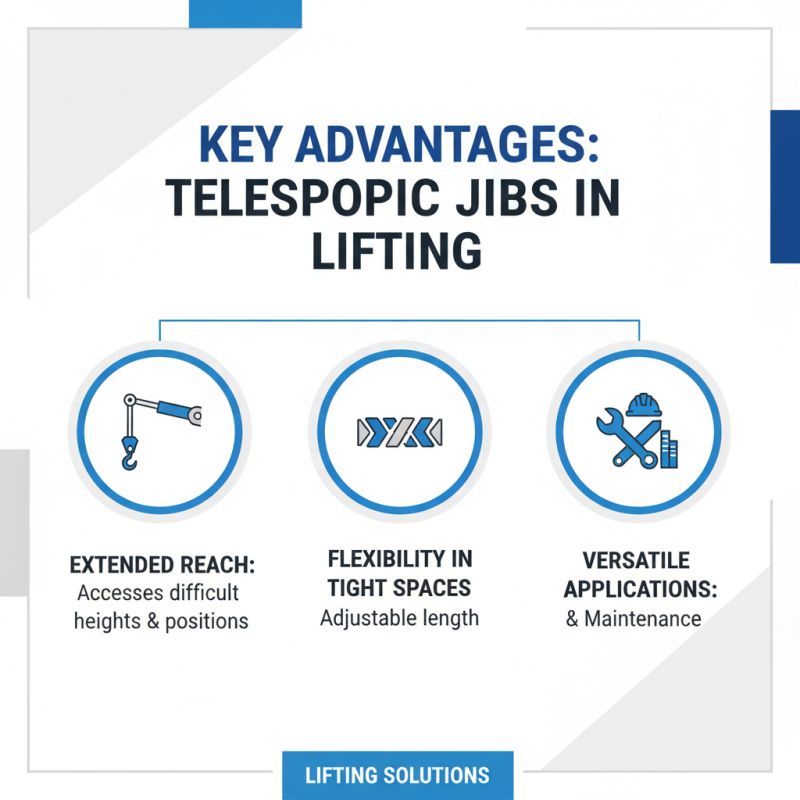
These jibs extend and retract, allowing for flexibility in various environments. For projects requiring adaptability, they offer unmatched benefits. Professionals often note that their ability to reach challenging spots saves both time and resources. However, not all users understand the intricacies of operating a Telescopic Jib effectively.
Many operators overlook critical safety practices, leading to potential hazards. Understanding load limits and operational procedures is vital. Adjusting a Telescopic Jib incorrectly can result in accidents or equipment damage. Thus, while the benefits are numerous, it's crucial to approach this powerful tool with respect and knowledge.
Understanding Telescopic Jibs: An Overview of Their Functionality
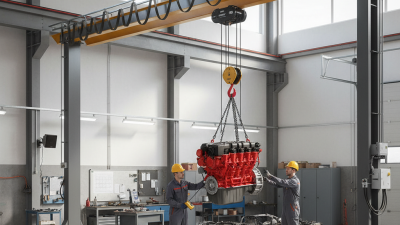
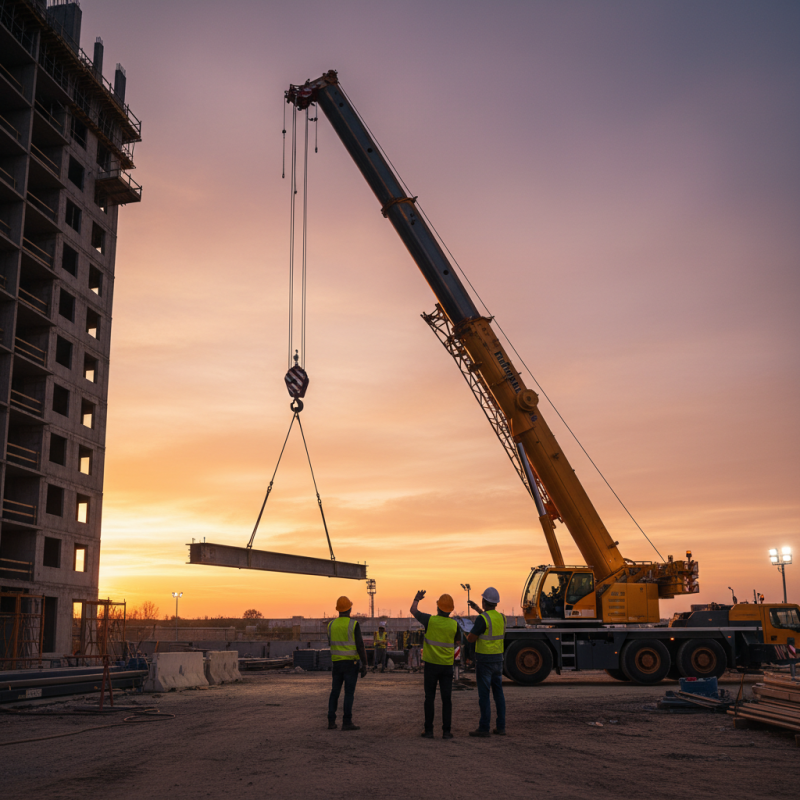
Telescopic jibs offer versatility and efficiency for heavy lifting tasks. These extensions connect to cranes or similar machinery, allowing operators to reach elevated and hard-to-access areas. Their design enables quick adjustments, making them invaluable on construction sites, in warehouses, and during outdoor events. The ease of operation directly impacts productivity.
One of the standout features of a telescopic jib is its extendable boom. This functionality allows it to navigate tight spaces while still lifting substantial weights. Some models include hydraulic mechanisms that enhance stability and control. However, mastery of these tools requires practice and understanding. Misjudgments in angles or loads can lead to challenging situations.
Operators must also consider safety protocols. Each lifting job presents unique challenges, and conditions can change rapidly. Continuous training and assessment can mitigate risks. Acknowledging limitations, both of the equipment and the operator’s experience, is essential in making informed decisions. Striking the right balance between capability and caution is crucial in utilizing telescopic jibs effectively.
Applications of Telescopic Jibs Across Various Industries
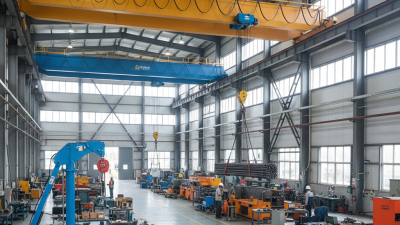
Telescopic jibs are invaluable tools in various industries. Their extendable nature allows for unique applications, particularly in construction and warehousing. A recent report by the Occupational Safety and Health Administration highlighted that telescopic jibs can increase efficiency by up to 30% during heavy lifting tasks. This can significantly minimize downtime and improve overall project timelines.
In industrial settings, telescopic jibs offer flexibility for maneuvering in tight spaces. For example, they can reach over obstacles, making them ideal for urban construction sites. The American National Standards Institute suggests that using these jibs can enhance safety and reduce the risk of accidents. Operators appreciate their ability to adjust the length while maintaining stability, making heavy loads easier to manage.
However, it's not without challenges. Operators need training to handle these sophisticated tools effectively. Misuse can lead to severe accidents. According to the National Institute for Occupational Safety and Health, a lack of training contributes to 20% of crane-related injuries. Thus, while telescopic jibs enhance productivity, proper operator education is essential. Striking a balance between efficiency and safety remains a critical consideration in their deployment.
Why Choose a Telescopic Jib for Your Lifting Needs?
| Industry |
Applications |
Load Capacity (ton) |
Max Reach (m) |
Safety Features |
| Construction |
Material handling, lifting heavy beams |
2.5 |
10 |
Overload protection, emergency stop |
| Manufacturing |
Assembly line support, heavy part placement |
3.0 |
8 |
Stability sensors, safety barriers |
| Logistics |
Loading and unloading containers |
5.0 |
12 |
Anti-tip mechanisms, load indicators |
| Utilities |
Powerline installation and maintenance |
1.5 |
15 |
Emergency brakes, impact sensors |
| Telecommunications |
Antenna installation and repair |
2.0 |
20 |
Wind speed monitoring, fall arrest systems |
Factors to Consider When Choosing a Telescopic Jib
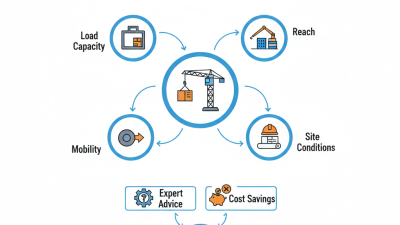
When selecting a telescopic jib, several key factors play a significant role. One crucial aspect is the weight capacity. It's vital to match the jib’s lifting capacity with your load requirements. This ensures safety and efficiency during operation. Overloading can lead to serious accidents. Always verify load ratings before use.
Another factor is the reach of the jib. Telescopic jibs offer varying lengths, providing flexibility for different jobs. Consider the height and distance needed for your specific lifting tasks. A longer reach can improve access to higher or further locations. However, longer jibs may compromise stability. Balancing reach and safety is necessary.
Additionally, the material and construction quality cannot be overlooked. A strong yet lightweight material can enhance maneuverability. However, cheaper materials may not withstand heavy usage. Evaluating the durability of a jib can prevent costly repairs. Reflecting on these elements helps ensure you choose the right telescopic jib for your needs. Think critically about the jobs at hand. Your safety and efficiency depend on your decision.
Safety Features and Best Practices for Telescopic Jib Usage
When using a telescopic jib, safety features are paramount. According to industry reports, nearly 70% of lifting accidents occur due to equipment failure. Inspections should be routine. Operators must check hydraulic systems, cables, and connections. A minor oversight can lead to catastrophic failure.
Best practices include maintaining proper load charts. Operators should never exceed the specified weight limits. A staggering 40% of lifting accidents result from overloaded equipment. Additionally, clear communication among the crew is essential. Hand signals or radios can significantly reduce confusion on the job site.
The environment around the lifting area plays a crucial role. Uneven ground can destabilize loads. A 2019 safety report highlighted that improper ground conditions are a common cause of incidents. Therefore, assessing the terrain and ensuring the ground is stable should be a habitual action for crews. Regular training and refreshers on safety can empower operators. Skills can fade over time; continuous learning is vital.
This chart illustrates the safety ratings across different dimensions of telescopic jibs, highlighting important features such as load capacity, stability, safety features, ease of use, and maintenance requirements. The evaluations are based on a scale from 1 to 10 where higher values indicate better safety performance.