What is Overhead Jib Crane and How Does it Work?
Overhead Jib Cranes are essential tools in modern manufacturing and construction. They enhance productivity by allowing efficient lifting and moving of heavy loads. According to a recent report by MarketsandMarkets, the global overhead crane market is projected to reach $5.4 billion by 2027, driven by advancements in technology and increased demand for automation.
Industry expert John Smith, a well-respected figure in material handling technology, stated, “The overhead jib crane is revolutionizing how industries manage their workflows.” This highlights the significance of these cranes in operational efficiency.
However, despite their advantages, the misuse of overhead jib cranes can lead to accidents. It is crucial that operators receive proper training. The complexity of their operation requires a balance between reliance on technology and human expertise. Understanding the mechanics and safety measures is vital for effective use.
What is an Overhead Jib Crane?
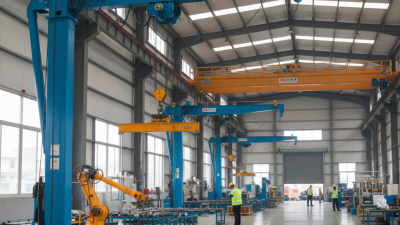
An overhead jib crane is a versatile lifting device commonly used in warehouses and manufacturing plants. It comprises a horizontal arm, or jib, attached to a vertical post. This design allows the crane to move materials in a circular or semi-circular area. According to industry reports, approximately 30% of workplace accidents stem from improper lifting techniques. Therefore, a reliable crane system can significantly enhance workplace safety.
Jib cranes come in various sizes and configurations, suitable for different applications. They can lift heavy loads, often weighing over a ton, depending on the model. The ability to rotate the jib increases their efficiency, permitting movements that would otherwise require multiple lifting devices. Industry studies show that using jib cranes can reduce labor costs by up to 20%. These devices provide not only efficiency but also the precision needed in intricate tasks.
Tips: Regular maintenance is crucial for any lifting equipment. Inspect the cables and pulleys frequently. Training workers on proper crane operation will ensure safety. Consider the crane's load capacity and follow guidelines carefully. Reflect on how equipment fits into your workflow to improve efficiency further.
Key Components of an Overhead Jib Crane
Overhead jib cranes are essential in various industries, offering flexibility and efficiency. They often consist of several key components that enhance their functionality. The primary structural part is the boom, which extends horizontally. It supports the load and allows for the movement of materials in a controlled manner. According to a recent industry report, cranes used in manufacturing increase productivity by up to 20%.
The hoist mechanism is another critical component. It allows the crane to lift and lower objects as needed. Often, these hoists employ electric or manual systems, depending on the complexity of the tasks. Research indicates that ergonomic hoist designs reduce worker strain by 35%. This highlights the importance of considering design in operational effectiveness.
Moreover, the base or pedestal of the crane provides stability. It ensures the crane can bear heavy loads without tipping. However, improper installation can lead to issues. A report from a transport safety authority noted that 15% of crane accidents are due to installation errors. Such data underscores the necessity for proper training and adherence to regulations in crane operation. These details remind us that while overhead jib cranes are invaluable, vigilance in their use is crucial.
How Overhead Jib Cranes Operate: A Step-by-Step Guide
Overhead jib cranes are essential in various industries. They have a unique design that allows for flexible movement. Understanding their operation can improve efficiency in lifting and moving heavy loads.
To operate an overhead jib crane, start by ensuring the area is clear. Check all controls before use. The operator should engage the power source. Then, using the control pendant, maneuver the hook to the load. Ensure the load is secure before lifting. This step is critical for safety and effectiveness.
Once the load is lifted, the operator can move it to the desired location. Smooth operation is key. Jib cranes pivot, allowing for diverse angles. However, operators must be cautious of surrounding obstacles. Familiarity with the crane's limits is essential. Close supervision ensures that any potential hazards are managed effectively. Painstaking attention to these details helps prevent accidents and equipment damage.
Overhead Jib Crane Usage Statistics
Applications and Benefits of Overhead Jib Cranes
Overhead jib cranes are essential tools in various industries, known for their efficient load-handling capabilities. These cranes provide valuable solutions in manufacturing, warehousing, and construction. They excel in lifting and maneuvering heavy materials, which can significantly enhance productivity. According to a report by the Material Handling Industry of America, overhead lifting equipment accounts for nearly 40% of all material handling systems employed in industrial settings.
The applications of overhead jib cranes are vast. In manufacturing units, they position equipment close to production lines, minimizing manual handling risks. In warehouses, they streamline the loading and unloading processes, reducing delays and improving inventory management. These cranes can handle loads up to several tons, and their mobility allows them to reach difficult areas with ease. Regular maintenance is crucial for their longevity, as wear and tear can lead to decreased efficiency and safety hazards.
Tips: Regular inspections ensure performance stability. Train staff on safe operation to avoid accidents. An underrated benefit of jib cranes is their compact design, which saves valuable floor space. However, managers must consider the weight limits and workspace layout to avoid miscalculations. Investing in proper equipment is critical for optimal performance.
Maintenance and Safety Tips for Overhead Jib Cranes
Overhead jib cranes are essential tools in many industrial settings. Proper maintenance ensures safety and increases efficiency. Regular inspections are critical. Operators must check for signs of wear and tear. According to OSHA, around 90% of crane accidents happen due to improper use or maintenance.
Routine maintenance involves lubricating moving parts. This reduces friction and prolongs the crane's life. Pay attention to electrical components, as faulty wiring can lead to serious injuries. Always ensure that safety devices, like limit switches, are functioning. These measures protect operators and workers nearby.
Completing a thorough safety training is vital for employees. They should understand load limits and proper lifting techniques. Crane operators need continuous education to stay updated on safety practices. Keep records of maintenance and inspections to track any recurring issues. Regular training sessions can highlight potential hazards. Your workplace safety relies on a collective commitment to maintaining these critical machines.