Leave Your Message

What Is an Overhead Jib Crane and How Does It Work?

An Overhead Jib Crane combines a horizontal boom, vertical mast, hoist, and rotating mechanism. It moves loads across a defined work zone. The boom swings, while the hoist raises or lowers the load. This design helps operators position steel parts, machinery, and pallets with controlled movement.

The market need is practical, not theoretical. MHI’s 2024 Annual Industry Report found that 83% of supply-chain leaders expected to increase technology investment. Labor shortages also remained a major concern. These findings support more efficient lifting systems, including properly specified jib cranes. OSHA’s crane-safety guidance continues to emphasize qualified operators, rated capacities, inspections, and stable foundations. Small details matter. A loose anchor can become a serious failure point.

David Michaels, former Assistant Secretary of Labor for Occupational Safety and Health, stated, “Every worker has a right to a safe and healthful workplace.” That principle applies directly to Overhead Jib Crane operation. A safer installation begins with accurate load calculations, adequate headroom, and a clear swing radius. Operators must also consider side pulling, shock loading, and uneven floor conditions.

Still, one point deserves reflection. A crane does not automatically improve productivity. Poor layout, rushed lifting, or weak maintenance can erase its benefits. The correct crane depends on reach, duty cycle, load shape, mounting method, and workplace traffic. This article explains how an Overhead Jib Crane works, where its advantages appear, and which technical decisions deserve closer review. Data supports the investment, but disciplined operation protects its value.
What Is an Overhead Jib Crane and How Does It Work?

Definition and Scope: Jib Cranes with 0.5–15 t Capacities and 180°–360° Reach

What Is an Overhead Jib Crane and How Does It Work?

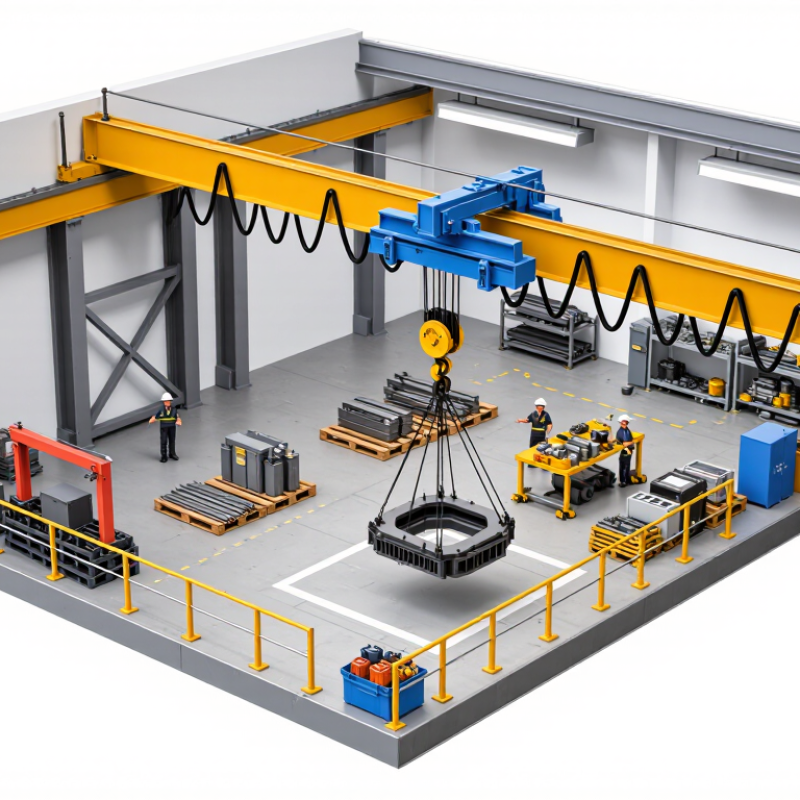
An overhead jib crane is a lifting system with a horizontal jib, trolley, hoist, and supporting structure. The hoist travels along the jib, while the jib rotates around a fixed column or overhead mounting point. This movement positions loads within a controlled working zone. Capacities commonly range from 0.5 to 15 tonnes, depending on the structure, span, and duty cycle.

Reach may cover 180°, 270°, or a full 360° rotation. A 180° jib suits a wall-side workstation, while a 360° model serves a circular production area.

The operator lifts the load vertically, moves it along the arm, and swings it into place. Smooth controls matter. Sudden starts can create dangerous load sway.

Selection requires more than checking the rated capacity. Engineers assess load shape, lifting frequency, jib length, headroom, foundation strength, and available travel space. A 5-tonne load at the jib tip can create different stresses than the same load near the column. The load chart must match the actual configuration. That detail is easy to miss.

In practical installations, floor movement, uneven anchoring, or limited clearance can reduce performance. Real sites are rarely perfect. Regular inspections should examine welds, bolts, bearings, brakes, hooks, controls, and wire rope or chain. Operators also need clear procedures and suitable training. Capacity labels help, but they cannot replace engineering judgment.

Core Components: Mast, Boom, Trolley, Hoist, Slewing Bearing, and Foundation

What Is an Overhead Jib Crane and How Does It Work?

An overhead jib crane lifts and moves loads within a defined work zone. Its mast transfers vertical forces into the foundation. A rigid foundation matters more than many new users expect. The boom projects outward from the mast. A trolley travels along the boom, positioning the load accurately. The hoist raises or lowers the load using a chain or wire rope. A slewing bearing allows the boom to rotate smoothly around the mast. Together, these parts create a controlled lifting path, not simply a swinging arm.

During operation, the hoist attaches to a rated lifting point. The trolley adjusts the radius. The slewing drive then turns the boom toward the delivery area. Operators should watch load swing, floor movement, and unusual bearing noise. In practical inspections, small foundation cracks can deserve immediate attention. A missed detail may become expensive. Load charts, brake tests, and fastener checks should match the equipment design and site conditions. The exact sequence can vary, and that is worth reviewing before training begins.

Tips: Keep the hook centered over the load before lifting. Never drag a suspended load sideways. Check boom deflection after installation. Record lubrication dates and inspection findings. If movement feels rough, stop and investigate rather than guessing. A qualified engineer should verify foundation capacity, anchor bolts, and rated load limits before regular service.

Load Movement Sequence: Hoisting, Trolley Travel, and Boom Rotation

What Is an Overhead Jib Crane and How Does It Work?

An overhead jib crane moves a load through three controlled actions: hoisting, trolley travel, and boom rotation. During hoisting, the wire rope or chain lifts the load vertically from the floor. The operator must keep the hook directly above the load. A side pull can bend components, damage the rope, or start dangerous swinging.

Next, the trolley travels along the boom or bridge. It changes the load’s horizontal position without lifting it higher. Boom rotation then moves the load around the crane’s working radius. These movements should remain smooth and coordinated. Sudden braking increases load swing and places extra force on the support structure. Field conditions are rarely perfect. Wind, uneven loading, and poor visibility can interrupt the planned sequence.

Tips: Confirm the load weight against the rated capacity before each lift. Check hook latches, ropes, brakes, controls, and limit devices. The U.S. Department of Energy’s Hoisting and Rigging Handbook stresses pre-use inspections and controlled movement. Its guidance also supports keeping personnel outside the suspended-load zone. The International Labour Organization estimated 2.93 million fatal work-related injuries and illnesses globally in 2019. That figure covers all industries, but it shows why lifting discipline matters. Operators should stop when the load begins to rotate unexpectedly. Reassess the sling angle, center of gravity, and trolley position. A slower lift is often the safer lift.

This calculated operating example shows the time required for a 10,000 kg load to complete a typical overhead jib crane movement sequence: hoisting 6 m at 0.20 m/s, trolley travel over 12 m at 0.40 m/s, and boom rotation through 90° at 1.50°/s. Actual cycle times depend on crane specifications, load conditions, acceleration, braking, and operator controls.

Engineering Parameters: Rated Load, Span, Lift Height, Duty Class, and Deflection

What Is an Overhead Jib Crane and How Does It Work?

It starts with capacity. An overhead jib crane uses a horizontal boom, trolley, hoist, and rotating support. The hoist travels along the boom, while the boom moves loads across a defined working radius. Rated load means the maximum lifted mass, including below-hook devices, not only the product. CMAA Specification No. 70 and ASME B30.2 recommend matching capacity with actual load cycles, impact, and operating conditions. A 2-ton load may require a higher design rating if lifting tools add 150 kilograms.

Span describes the distance between supporting points or runway centers, depending on the crane arrangement. Lift height is the usable hook path, measured from the floor to the highest practical hook position. It must include pallet height, sling length, and clearance below beams. Duty class reflects frequency and load spectrum. CMAA uses Classes A through E, while FEM classifications provide comparable service categories. Deflection also matters. A common preliminary check uses L/600 for bridge-girder deflection, but project specifications can differ. Excess movement may cause trolley travel problems, sway, or operator discomfort.

Tips: Measure the hook, not just the boom. Record lifts per hour and average load. Check the worst load position, especially near the boom tip. A neat calculation can still miss real impacts. Field observations should challenge the original assumptions. Small errors matter. Cite CMAA Specification No. 70, ASME B30.2, and FEM 1.001 during design review.

Safety and Compliance: ASME B30.16 Hoists, OSHA 1910.179, and Inspection Rules

An overhead jib crane uses a vertical mast, a horizontal boom, and a trolley-mounted hoist. The hoist lifts loads while the trolley travels along the boom. Rotation may be manual or powered, depending on the design. Safe operation starts before the hook leaves the ground.

ASME B30.16 provides detailed guidance for hoists, including inspection, operation, maintenance, and load-handling practices. Its requirements commonly address hooks, chains, wire rope, brakes, limit devices, controls, and warning labels. OSHA 1910.179 covers overhead and gantry cranes in the United States, including inspection expectations and safe operating conditions. A jib crane installation may also involve site-specific structural and electrical requirements. The exact legal application should be confirmed by a qualified safety professional.

Inspection frequency depends on service severity. Operators should perform a visual check before use, looking for damaged hooks, loose bolts, abnormal noise, leaking gearboxes, and worn chains. Frequent inspections may occur daily or monthly, while periodic inspections typically require a deeper review and documented findings. Keep records with dates, defects, corrective actions, and the inspector’s qualifications. A checklist helps, but it can still miss a cracked weld or a brake that fails only under load. That deserves honest attention. Never exceed the rated capacity, and remove defective equipment from service until a competent person approves its return.