Top 10 Gantry Overhead Cranes for Global Buyers in 2026?
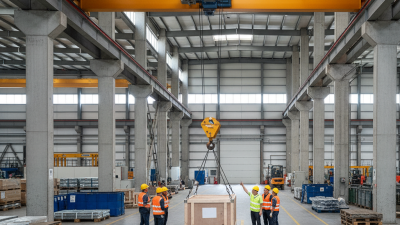
In the ever-evolving landscape of industrial equipment, Gantry Overhead Cranes stand out as a vital asset. These cranes offer flexibility and efficiency for various lifting tasks. As global demands increase, the need for reliable machinery becomes essential. Buyers must navigate a crowded market in search of the best options available.
Gantry Overhead Cranes come in diverse designs and capacities, catering to different industries. The right choice can greatly improve workflow and safety in facilities. However, selecting the appropriate crane is not without its challenges. Understanding key features, maintenance needs, and cost implications is crucial.
Despite their advantages, not all models provide the same level of performance. Some may fall short in durability or ease of use. As buyers evaluate the top ten options for 2026, it's important to consider both strengths and weaknesses. Informed decisions will ensure long-term satisfaction and efficiency in operations.
Overview of Gantry Overhead Cranes and Their Applications
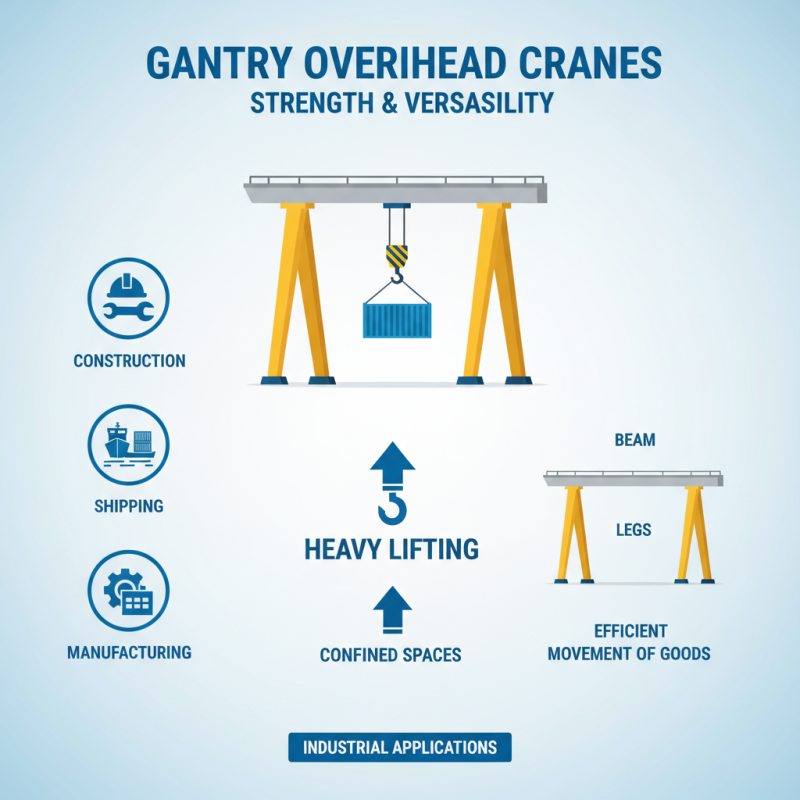
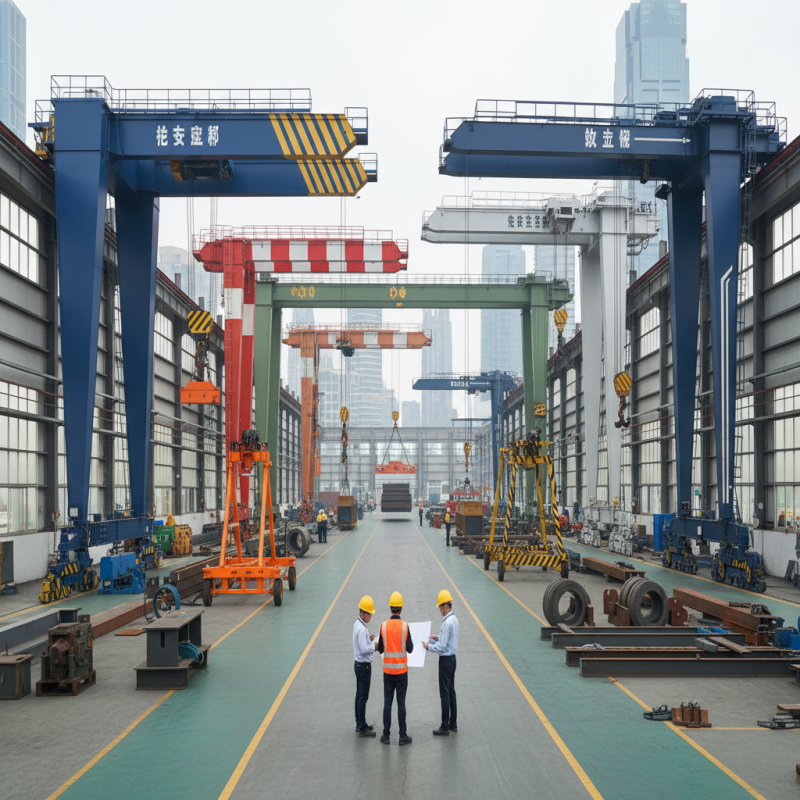
Gantry overhead cranes are essential in numerous industries. They are widely used in construction, shipping, and manufacturing. These cranes provide strength and versatility, allowing for heavy lifting in confined spaces. Their design includes a beam that spans the area, with two or more legs supporting the structure. This setup enables efficient movement of goods.
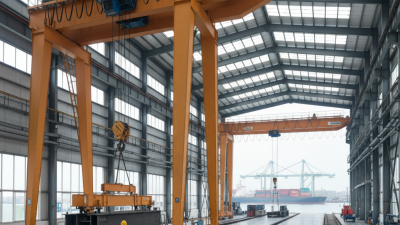
Applications of gantry cranes vary significantly. In warehouses, they can lift pallets and bulky materials. In shipyards, they facilitate loading and unloading containers. They are also utilized in metal fabrication shops for moving heavy steel components. The adaptability of these cranes showcases their importance.
Despite their advantages, challenges exist. Their size can limit space efficiency in smaller facilities. Maintenance is crucial, as wear and tear can affect performance. Users must schedule regular inspections to ensure safety. The learning curve for operators can also be steep, impacting productivity initially. Understanding these factors is key to maximizing the benefits of gantry overhead cranes.
Factors Influencing the Selection of Gantry Overhead Cranes
When selecting gantry overhead cranes, several key factors play a crucial role. The lifting capacity is vital. Buyers need to assess their specific operational demands. Some projects may require handling heavy loads, while others could prioritize speed. Evaluating the crane's capacity in relation to these needs is essential.
The design and mobility of the crane matter too. Fixed cranes are stable but lack flexibility. In contrast, adjustable models offer mobility, making them suitable for various operational setups. Buyers should consider the layout of their work environment. A crane that fits seamlessly into existing structures helps improve efficiency.
Maintenance requirements are another important aspect. Some cranes may need frequent servicing, which can lead to increased costs. Therefore, selecting a model with user-friendly maintenance features can save time and resources. Reflecting on these factors will lead to more informed decisions. The balance between cost and functionality must be carefully evaluated for each unique project.
Top 10 Gantry Overhead Cranes: Features and Specifications
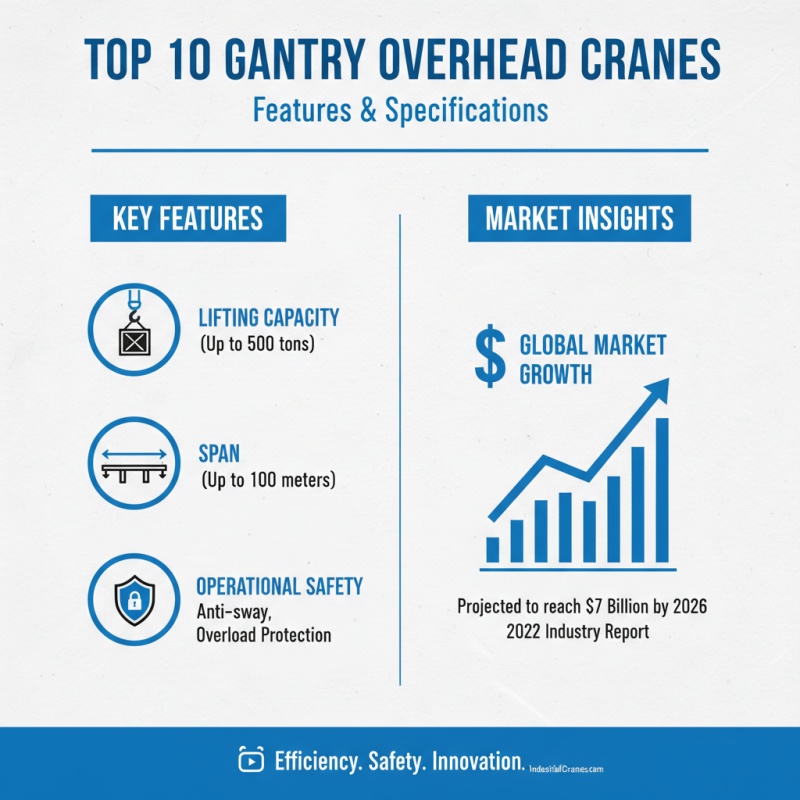
Gantry overhead cranes are essential in industries for their efficiency and safety. As global demand increases, selecting the right crane becomes crucial. According to a 2022 industry report, the global market for gantry cranes is projected to reach $7 billion by 2026. Key features drive this growth, including lifting capacity, span, and operational safety.
When evaluating gantry cranes, consider lifting capacity. Most cranes range from 1 to 50 tons, but some specialized models can lift up to 100 tons. Span dimensions vary significantly. A typical gantry crane spans 10 to 40 feet. A broader span increases versatility but may compromise stability.
Safety features are paramount. Many modern cranes come with anti-collision systems and overload sensors. A study indicated over 30% of crane accidents occur due to operational errors. Hence, training for operators is vital. Innovative designs are emerging, yet the demand for reliability remains. Manufacturers must also address environmental factors affecting operations.
Market Trends and Innovations in Gantry Overhead Crane Technology
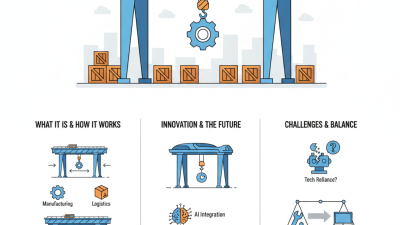
Gantry overhead cranes are evolving with new technologies. These cranes are crucial in industries like construction and manufacturing. As we approach 2026, market trends reflect a shift toward efficiency and safety. Manufacturers are integrating smart technologies for better performance and reliability.
One significant innovation is the use of IoT (Internet of Things) in crane design. Smart sensors monitor usage and detect faults in real-time. This can reduce downtime and increase operational safety. Moreover, the lightweight materials used in newer models enhance their lifting capacity while reducing energy consumption. These advancements make cranes more environmentally friendly and cost-effective.
Despite these improvements, challenges remain. Some companies struggle with the adoption of new technologies due to high initial costs. Others may face training issues for operators unfamiliar with smart systems. Addressing these challenges is essential for maximizing the benefits of modern gantry cranes. A focus on user-friendly interfaces is vital in overcoming these obstacles. The future looks promising but requires ongoing innovation and adaptation.
Comparison of Global Brands in Gantry Overhead Crane Manufacturing
Gantry overhead cranes play a crucial role in manufacturing and construction industries worldwide. They are widely used for lifting heavy loads in warehouses, rail yards, and heavy fabrication plants. According to the latest industry report from Grand View Research, the global gantry crane market is expected to reach USD 4.65 billion by 2026. This growth is driven by rising demand for efficient material handling and improved operational efficiency.
In terms of manufacturing capabilities, various brands have positioned themselves in the market. Key features to consider include lifting capacity, span length, and automation level. The European market appears to focus more on advanced technology integration. In contrast, Asian manufacturers often emphasize affordability. A study by MarketsandMarkets indicates that nearly 60% of buyers prioritize cost-effectiveness over advanced features. This gap shows a potential area for improvement in addressing buyer needs.
While some brands excel in customer service, others struggle with maintenance support. The variability in experience highlights the need for careful assessment. Manufacturers that prioritize user training and ongoing support often outperform competitors. Data indicates that 70% of buyers report dissatisfaction with insufficient post-purchase assistance. This reality urges manufacturers to reflect on their service strategies for long-term success.
Top 10 Gantry Overhead Cranes for Global Buyers in 2026
| Rank |
Load Capacity (tons) |
Span (meters) |
Lift Height (meters) |
Power Supply (V) |
Operating Speed (m/min) |
Control Type |
| 1 |
10 |
20 |
12 |
400 |
10 |
Remote |
| 2 |
15 |
25 |
15 |
380 |
9 |
Wired |
| 3 |
20 |
30 |
20 |
440 |
8 |
Remote |
| 4 |
25 |
35 |
18 |
400 |
12 |
Wired |
| 5 |
30 |
40 |
22 |
480 |
7 |
Remote |
| 6 |
35 |
45 |
25 |
400 |
10 |
Wired |
| 7 |
40 |
50 |
30 |
500 |
7 |
Remote |
| 8 |
45 |
55 |
35 |
480 |
6 |
Wired |
| 9 |
50 |
60 |
40 |
550 |
5 |
Remote |
| 10 |
55 |
65 |
45 |
600 |
4 |
Wired |