Leave Your Message

China Top Jib Crane Manufacturers and Suppliers

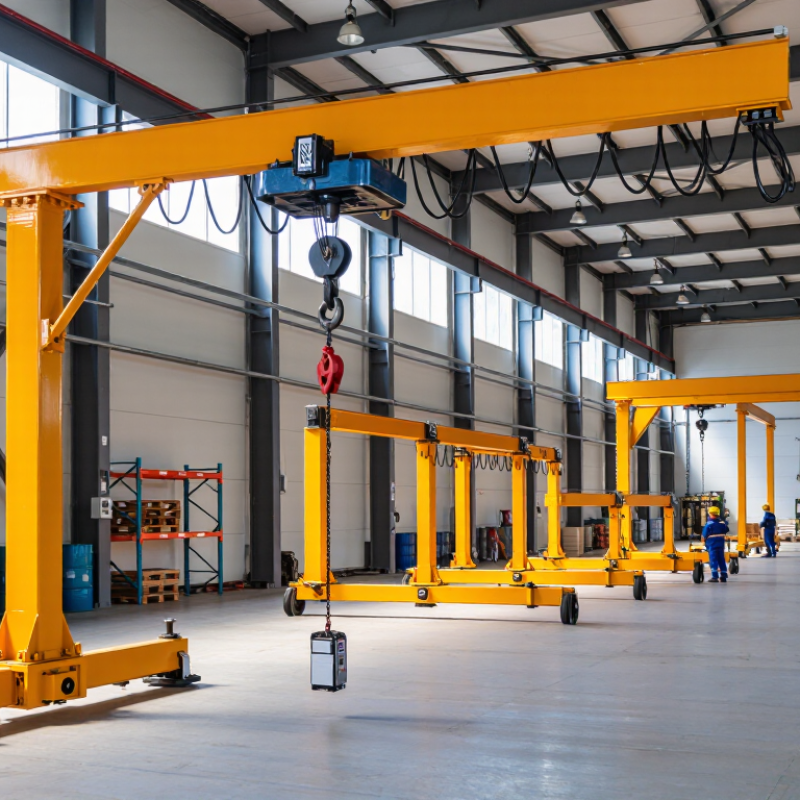
China has become a major sourcing destination for reliable lifting equipment, including wall-mounted, floor-mounted, and portable Jib Crane systems. Manufacturers and suppliers serve workshops, warehouses, shipyards, construction sites, and production lines. Their product ranges often include electric hoists, slewing arms, pendant controls, variable-speed drives, and custom base structures.

“A Jib Crane is only as dependable as its foundation, controls, and daily inspection,” says Mark Bridger, a lifting-equipment engineer and crane safety consultant. This practical view matters when comparing Chinese suppliers. A polished catalogue is not enough. Buyers should examine load charts, welding quality, rotation limits, brake performance, test records, and after-sales support. Small details matter. A loose anchor bolt can change everything.

Experienced sourcing also requires careful communication. Suppliers should confirm working load, outreach, lifting height, duty class, power supply, installation conditions, and operating temperature. Factory visits, video inspections, and documented quality checks can reveal differences hidden behind similar prices. Still, no supplier is perfect. Some product pages may lack technical depth, and delivery promises can sound more certain than they are. That deserves honest review.

This guide introduces leading China Jib Crane manufacturers and suppliers through practical selection criteria. It considers engineering capability, customization, certifications, production experience, export service, and customer support. The goal is not to name the cheapest option. It is to identify dependable partners for safe, efficient, and maintainable lifting operations.
China Top Jib Crane Manufacturers and Suppliers

China Jib Crane Types: Wall, Pillar, and Mobile Designs up to 20 t

China’s jib crane sector serves factories, shipyards, warehouses, and maintenance bays. A 2024 report from Grand View Research valued the global crane market at over USD 45 billion, with industrial lifting demand supporting continued jib crane development. Wall-mounted designs save floor space and suit repetitive lifting near production lines. Their capacity can reach 20 tonnes, but wall strength and anchor design remain critical. A strong hoist cannot correct a weak building column.

Pillar jib cranes provide independent support and usually offer smoother 180- or 360-degree rotation. They work well beside machines, loading stations, and steel structures. Buyers should check maximum radius, foundation thickness, duty class, and brake performance. A 20-ton rating applies under defined conditions. It does not mean 20 tonnes at every outreach. That detail is often missed.

Mobile jib cranes add flexibility for repair work and short-term lifting. Their casters, counterweights, and locking systems need careful inspection on uneven floors. The International Labour Organization highlights equipment inspection and worker competence as core safety controls, while ISO 4301 classification helps match crane duty with operating cycles.

In practical use, operators should examine hooks, welds, limit devices, and pendant controls before each shift. Some suppliers still present capacity without showing fatigue data or test procedures. That deserves questions. Specification sheets should include proof-load testing, material traceability, electrical protection, and spare-part support, not only attractive lifting numbers.
Key Performance Metrics: SWL, Span, Lift Height, and 360° Rotation

Selecting a jib crane supplier starts with measurable performance, not polished catalog language. In field inspections, safe working load (SWL) is the first figure I verify. SWL defines the maximum permitted load under stated conditions. It is not the structure’s breaking strength. A 1,000-kilogram rating may change with outreach, duty cycle, hoist position, or foundation design. That distinction matters. Ask for certified load charts, inspection records, and clear testing procedures.

Span determines how far the hook can reach from the mounting point. A longer span improves access but can increase structural stress and deflection. Lift height must include hook travel, beam clearance, and the working height of the load. Measure twice. A compact workshop may lose valuable clearance when the trolley, hook block, and load occupy the same vertical space. Suppliers should provide dimensional drawings based on the actual installation area, not generic examples.

A 360° rotation range can cover a broad circular work zone, yet walls, columns, doors, and nearby equipment may restrict real movement. Rotation stops, braking control, and operator visibility deserve careful review. I have seen specifications that looked complete but ignored foundation stiffness and local vibration. That was a useful warning. Experienced manufacturers and suppliers should explain these limitations, recommend suitable duty classifications, and support commissioning records. Reliable performance comes from matching SWL, span, lift height, and rotation to daily handling patterns.

Manufacturer Compliance with GB/T 3811-2008 and ISO 4301-1 Standards

China Top Jib Crane Manufacturers and Suppliers

Reliable jib crane manufacturers should treat GB/T 3811-2008 and ISO 4301-1 as working requirements, not decorative certificates. GB/T 3811-2008 addresses crane design, stability, strength, mechanisms, and safety devices. ISO 4301-1 classifies cranes through utilization class and load spectrum. This classification affects hoist selection, braking capacity, fatigue checks, and service life. A supplier should provide calculation files, material certificates, weld inspection records, and traceable component data. Clear evidence matters.

Details reveal manufacturing quality. Check the mast base, slew bearing, boom welds, cable routing, emergency stop, and upper travel limit. The nameplate should show rated load, working radius, lifting speed, duty group, and inspection date. A factory acceptance test should record no-load and rated-load movements, brake holding, limit-switch response, and abnormal vibration. The International Labour Organization estimated 2.93 million work-related deaths worldwide in 2019, reported in its 2023 safety assessment. That figure is not crane-specific, but it reinforces the cost of weak risk control. A market report may praise rapid equipment growth; it cannot replace engineering proof. A certificate alone is insufficient. Sometimes, supplier documents look complete but omit fatigue assumptions or actual duty cycles. That gap deserves questioning. Buyers should compare declared A-classification values with real daily starts, load ratios, and operating hours. Conservative selection is often less impressive, yet more dependable.

China Top Jib Crane Manufacturers and Suppliers - Manufacturer Compliance with GB/T 3811-2008 and ISO 4301-1 Standards

Evaluation Dimension Reference Requirement or Technical Basis Applicable to Jib Cranes Evidence to Request from a Supplier Recommended Data Field
Design standard GB/T 3811-2008 is the Chinese design rules standard for cranes and covers structural, mechanical, electrical, safety and operational design principles. Used as a primary design reference for fixed-column, wall-mounted, travelling and articulated jib crane systems supplied for the Chinese market. Design calculation package, general arrangement drawing, load combinations and signed engineering review records. Standard edition, design responsibility, calculation status and approval date.
Classification of duty ISO 4301-1 classifies cranes and lifting appliances according to the expected utilization and load spectrum during their working life. The selected classification should reflect lifting frequency, average load level, operating hours and the required service life of the jib crane. Duty-class selection sheet, operating-cycle assumptions and confirmation that the classification matches the purchaser’s application. ISO classification, annual operating hours, estimated cycles and average load spectrum.
Rated lifting capacity The rated capacity must be defined for the complete lifting arrangement, including the hoist, hook, load-handling device and any permanent accessories. Capacity normally changes with the working radius on articulated or wall-mounted designs and must be clearly stated on technical drawings and nameplates. Rated-capacity chart, hook-load limits, hoist data sheet and proof-load or functional-test records where applicable. Maximum capacity, capacity at rated radius, hook capacity and load chart availability.
Working radius and outreach The design must account for the specified outreach, load position, overturning moment, deflection and the strength of the supporting structure. Critical for floor-mounted and wall-mounted jib cranes because the support, anchor system or building structure carries the reaction forces. Reach dimension, reaction-force data, foundation or wall-interface drawings and structural-interface requirements. Minimum and maximum radius, usable outreach, support type and maximum support reactions.
Vertical lifting height Lifting height is determined by the hook path, headroom, hoist arrangement, upper and lower limits, and the required safe clearance. The available height must be checked against roof obstructions, production equipment, access areas and the hoist’s minimum headroom. Elevation drawing, hook travel specification, headroom dimension and upper/lower travel-limit arrangement. Effective lift, minimum headroom, hook position and limit-switch configuration.
Structural verification The jib, column, brackets, welds, bolts, pins and connections should be checked for strength, stability, fatigue and serviceability under specified load cases. Verification is especially important for cantilevered booms and systems installed on existing floors, columns or walls. Material certificates, weld procedures, weld-inspection records, bolt grades and structural calculation files. Main material grade, connection type, weld-inspection method and calculation revision.
Rotation and travel system The rotation mechanism and any travelling mechanism should be selected for the required movement, braking, acceleration, stopping distance and operating environment. Jib cranes may use manual rotation, electric rotation, powered trolley travel or a combination of these functions. Motor and brake data, rotation-angle limits, trolley details, control diagram and functional-test procedure. Rotation range, trolley travel, operating speed, braking method and control mode.
Safety devices Safety provisions should address overload prevention, over-travel, emergency stopping, unintended movement, access protection and safe maintenance. Typical provisions include upper and lower hoist limits, rotation stops, overload protection, emergency stop controls and clearly marked rated capacity. Safety-component list, wiring diagram, risk assessment, test records and operation and maintenance manual. Safety-device coverage, test method, inspection interval and responsible party.
Electrical protection Electrical equipment should be selected for the rated voltage, duty, ambient conditions, enclosure requirements, grounding and protection against short circuit and overload. The control system must suit the installation environment, including dust, humidity, temperature and indoor or outdoor service. Electrical schematic, motor ratings, protection class, grounding diagram, control-panel inspection and insulation-test records. Power supply, control voltage, enclosure rating, grounding method and environmental rating.
Manufacturing quality control Manufacturing controls should provide traceability for materials, welding, machining, assembly, coating, inspection and final testing. Quality controls are relevant to all jib crane types because structural and mechanical reliability depends on the complete manufacturing process. Quality plan, inspection and test plan, material traceability records, nonconformance procedure and final inspection report. Documented quality system, inspection stages, traceability scope and acceptance criteria.
Installation and commissioning Installation must follow the approved drawings and account for foundation strength, anchor installation, alignment, clearances and functional safety tests. For floor, wall and column-mounted designs, the interface between the crane and the host structure must be verified before installation. Installation method statement, anchor or weld details, alignment report, commissioning checklist and operator training record. Installation responsibility, foundation data, interface drawings, commissioning date and training status.
Documentation package A complete technical file should allow the purchaser to identify the crane, understand its limitations and maintain it safely throughout its service life. Required for both standard and customized jib cranes, particularly where the crane is integrated into a production line or existing structure. User manual, spare-parts list, drawings, certificates, inspection records, maintenance schedule and warranty terms. Document completeness, language, revision control, retention period and after-sales contact process.

Note: Actual compliance should be confirmed against the approved project design, applicable Chinese regulations, the latest contractual requirements and the supplier’s controlled technical documentation. GB/T 3811-2008 and ISO 4301-1 address different aspects of crane design and classification; neither standard alone replaces a project-specific safety assessment.

How to Rank China’s Top Jib Crane Manufacturers by Safety and Service Data

Ranking China’s top jib crane manufacturers requires more than comparing prices or lifting capacity. Safety data should carry the greatest weight. The ILO’s 2023 report, A Call for Safer and Healthier Working Environments, estimates nearly three million work-related deaths worldwide each year. That figure makes supplier verification practical, not optional.

Request three years of incident records, reported per million operating hours. Check lifting-test failures, overdue inspections, and corrective-action closure times. Compare each manufacturer with ISO 9927-1 inspection practices, ISO 12480-1 safe-use guidance, and applicable Chinese national standards. A stronger supplier can provide signed inspection sheets, load-test videos, material certificates, and traceable serial numbers. Missing records matter.

Service data should receive the remaining score. Measure first-response time, mean repair time, spare-parts fill rate, technician training hours, and warranty claims per 100 cranes. A useful model assigns 60% to safety and 40% to service. Penalize unverified claims heavily. Site visits often reveal details that brochures hide, such as loose cable routing or poorly labeled emergency stops. I have seen rankings change after one maintenance interview. That is uncomfortable, but useful. Data can also be incomplete, especially when smaller factories record incidents differently. State the limitation clearly, then request independent audits and customer references from comparable lifting environments. Reliable rankings are built from evidence, not confident language.

Supplier Selection: CE Certification, Lead Time, Warranty, and Export Capacity

China Top Jib Crane Manufacturers and Suppliers

Selecting a jib crane supplier requires more than comparing prices. In practical sourcing, CE certification should be checked carefully. Ask for the Declaration of Conformity, risk assessment, test records, and matching equipment details. The certificate should cover the actual crane model, not a similar product. Photos of the nameplate can reveal small but important inconsistencies. A certificate alone is not enough.

Lead time must be linked to a clear production schedule. Request dates for design approval, fabrication, testing, and shipment. Reliable suppliers explain possible delays, including steel shortages or port congestion. Warranty terms should define coverage, response time, spare parts, and labor responsibilities. A two-year warranty may sound attractive, but weak after-sales communication can make it less useful. I have seen buyers overlook this point. It is an expensive mistake.

Tips:

Request a sample inspection report, confirm export documents, and ask for recent delivery references. Check packing methods for motors, electrical cabinets, and exposed steel parts. Export capacity also includes suitable voltage, local manuals, customs support, and safe container loading. Suppliers with limited international experience may offer good equipment but incomplete paperwork. That gap can delay installation. A short video call with the engineering and export teams often reveals more than a polished quotation. Don’t rely on promises alone.