Leave Your Message

How to Choose a Single Girder Crane in 2026?

Choosing a Single Girder Crane in 2026 requires more than comparing purchase prices. The decision affects safety, production speed, maintenance, and long-term energy use. Grand View Research valued the global overhead crane market at approximately USD 4.6 billion in 2023. Its forecast indicates steady growth through 2030. Fortune Business Insights also identifies automation, warehouse expansion, and manufacturing investment as major market drivers. However, these reports generally combine several crane types. Their figures should not be treated as precise Single Girder Crane demand.

CMAA guidance remains highly relevant. Rated capacity is only one part of the selection. Span, lift height, duty classification, travel speed, ambient temperature, control method, and building structure must match the real workplace. A 5-ton crane lifting steel coils every few minutes needs a different design from one moving occasional maintenance parts. Small details matter. Rail alignment matters. Brake access matters.

Crane engineer and safety educator Mark H. Wild states, “The right crane is selected by the application, not by capacity alone.” That principle should guide every specification review. Yet even experienced buyers can overlook future production changes. A crane sized perfectly today may become restrictive next year. Review actual load records, lifting frequency, hook approach, and aisle conditions before requesting quotations. Check the manufacturer’s service network and documented compliance evidence. A low quotation can conceal higher downtime. That is an uncomfortable possibility. This 2026 guide examines practical selection criteria, common specification mistakes, and the evidence needed for a reliable Single Girder Crane investment.
How to Choose a Single Girder Crane in 2026?

What Is a Single Girder Crane and How Does It Work?

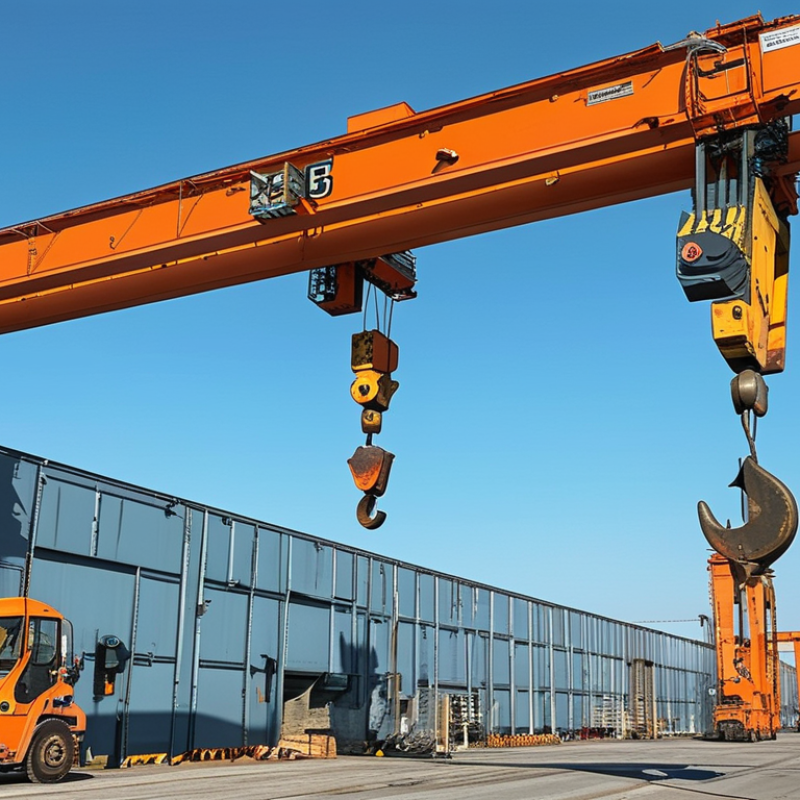
A single girder crane uses one horizontal bridge beam supported by end trucks running along runway rails. A trolley travels across the bridge, while an electric hoist raises and lowers the load. Pendant controls or a radio remote directs movement. Think of a steel beam crossing a workshop, with the hoist sliding beneath it.

The mechanism is simple, but the selection is not. The 2024 Grand View Research crane report projects a 4.6% compound annual growth rate for the global crane market from 2024 to 2030. That growth reflects rising demand for safer, more flexible material handling. However, market growth does not make every crane suitable. Check rated capacity, span, lifting height, travel speed, duty cycle, headroom, and power supply. CMAA Specification No. 70 and ASME B30.17 provide useful engineering and safety references.

Look closely at the load pattern. A 5-ton load moved twice daily differs from a 3-ton load moved every few minutes. In plant assessments, this mistake appears often. A lower-priced crane may look efficient. It may not survive repeated starts, stops, and shock loading. Moisture, dust, heat, and limited aisle space also change the design. Measure the runway and floor before requesting quotations. Small errors become expensive later.
How to Define Load Capacity, Span, and Lifting Height

How to Choose a Single Girder Crane in 2026?

How to Define Load Capacity, Span, and Lifting Height

Choosing a single girder crane starts with accurate site measurements. Define the safe working load, not only the average load. Include the hook, sling, spreader beam, and possible impact forces. A 5-ton load may require a higher rated crane when attachments add weight. Consider the heaviest load first. Also check the lifting frequency and daily operating hours. These details influence the crane’s duty classification and service life.

Measure the span between runway rail centers, rather than guessing from the building width. Check column positions, roof structures, and required side clearances. A longer span can increase girder deflection and trolley travel demands. I have seen projects fail during planning because one support column reduced the usable runway by several centimeters. Small errors become expensive later. Ask a qualified engineer to verify wheel loads, end truck movement, and runway strength.
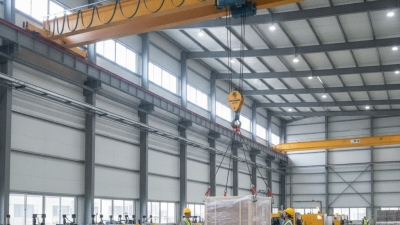
Tips: Record three dimensions on site: floor to obstruction, floor to hook, and hook to highest lifting point. Lifting height means useful hook travel, not simply building height. Leave headroom for the trolley, hoist, and maintenance access. Check the lowest hook position too. It may be overlooked. Perfect measurements are rare, so recheck them before ordering. Confirm local safety requirements and inspection procedures with a competent professional.

Which Hoist, Trolley, and Operating Speed Should You Choose?

Choosing a single-girder crane starts with the hoist, not the catalog headline.

A 2024 Fortune Business Insights report valued the global overhead crane market at USD 4.25 billion in 2023. Growth does not make every configuration suitable. Record the heaviest load, lifting frequency, hook travel, headroom, and load shape. Include slings, spreader beams, and other below-hook equipment.

A 5-ton load can become a 5.4-ton lift.
That detail matters.

For compact workshops, an electric wire-rope hoist usually suits higher lifts and smoother travel. An electric chain hoist may fit lower capacities and tighter spaces. Its speed and duty limits still need checking.

Select capacity above the normal load, then verify duty class through ISO 4301 or CMAA service guidance. Light, occasional lifting does not automatically justify heavy-duty equipment. Repeated hot cycles can. Ask for motor thermal limits, brake-holding data, and actual test records.

Specifications are not experience.

Trolley speed should match positioning accuracy. A 20 m/min trolley suits open production bays, while 5–10 m/min offers better control near fixtures. Hoisting often needs two speeds, such as 0.8 and 5 m/min. Use the slower setting for final placement.

Bridge speed deserves equal attention; fast travel can increase load swing. OSHA 1910.179 requires rated-load marking and inspection controls, but compliance cannot replace a lift plan.

I would not choose maximum speed automatically. That assumption can become expensive. Test representative loads before approval, recording stopping distance, sway, and operator feedback.

How to Match Crane Design to Work Environment and Duty Class

How to Choose a Single Girder Crane in 2026? Choosing a single girder crane starts with the work environment, not only the rated capacity. Measure the span, lifting height, travel distance, and available headroom. A compact workshop may need a low-headroom hoist, while a fabrication bay may require longer travel and faster positioning. Record the heaviest load, its shape, and how often it moves each hour. A 5-ton load lifted twice daily creates different demands than a 3-ton load moved continuously.

The duty class should reflect real operating patterns. Frequent starts, short cycles, shock loading, and hot materials increase mechanical stress. Dust, moisture, corrosive vapors, and outdoor temperature changes also affect electrical and structural choices. Review the runway alignment, floor condition, power supply, and maintenance access with a qualified crane engineer. Rated capacity is not the whole design. A crane can lift the weight but still perform poorly if the trolley, controls, or brakes suit a lighter duty cycle. That mistake is easy to make.

Tips: Leave practical clearance around the load and end stops. Check hook approach on both sides. Ask for inspection records and load-test documentation. Specify environmental limits clearly. Do not rely on a clean drawing alone; site measurements can expose uneven rails, blocked access, or unexpected headroom loss. I have seen planning assumptions fail after installation, especially when future production changes were ignored. Recheck the duty class before ordering. Wasteful overdesign costs money, but underdesign can shorten service life and compromise reliability.

How to Compare Safety Features, Costs, and Maintenance Needs

How to Choose a Single Girder Crane in 2026?

Safety should guide the comparison, not only lifting capacity. A single girder crane needs overload protection, upper-limit switches, emergency stopping, guarded moving parts, and clearly visible rated-load markings. ASME B30.2 provides inspection and operating guidance for overhead cranes, while OSHA 29 CFR 1910.179 requires regular inspections and safe operating practices. These standards do not replace engineering judgment. They only establish a baseline.

Look closely at total cost. Purchase price is just the visible part. Include installation, runway changes, controls, operator training, energy use, inspections, spare parts, and downtime. The 2024 MHI Annual Industry Report found that 55% of surveyed supply-chain professionals expected technology investment to increase. That supports considering remote diagnostics or load monitoring, but these features can become expensive ornaments without a maintenance plan. The U.S. Bureau of Labor Statistics recorded 5,283 fatal work injuries in 2023, reminding buyers that safety decisions have serious consequences beyond budgets.

Maintenance needs should match the working environment. Dust, humidity, corrosive chemicals, and frequent starts can shorten brake, wheel, and rope life. Ask for inspection intervals, component availability, service response times, and maintenance records. ISO 9927-1 recommends systematic crane inspections, yet many buyers still compare only motor power and price. That is a weak comparison. A lower-cost crane may consume more money through unplanned stoppages. I would also leave a documented contingency budget, because real factories rarely remain as clean or predictable as the original specification.

How to Choose a Single Girder Crane in 2026? — How to Compare Safety Features, Costs, and Maintenance Needs

Typical planning comparison for electrically powered indoor single-girder overhead cranes. Actual selection should be confirmed through a site survey, duty-cycle calculation, structural review, and applicable local regulations.
Comparison Dimension Light-Duty Indoor
Configuration
General-Purpose
Workshop Configuration
Heavy-Duty Production
Configuration
Harsh-Environment
Configuration
Typical rated load 1–5 metric tonnes 5–10 metric tonnes 10–20 metric tonnes 5–15 metric tonnes
Typical span 8–18 metres 12–25 metres 15–30 metres 10–25 metres
Typical lifting height 4–8 metres 6–12 metres 8–15 metres 6–12 metres
Recommended duty profile Occasional lifting, light workshop use, fewer than 20 lifting cycles per hour Regular material handling, approximately 20–40 lifting cycles per hour Frequent production handling, approximately 40–60 lifting cycles per hour Regular handling where dust, humidity, outdoor exposure, or corrosive conditions are present
Typical control system Pendant control with two-speed travel and lifting Pendant or radio control with adjustable-speed drives Radio or cabin control with adjustable-speed drives and load monitoring Sealed pendant or radio control with protected electrical enclosures
Core safety features Upper and lower lifting limits;
overload protection;
emergency-stop control;
mechanical travel end stops
All light-duty features plus:
motor thermal protection;
anti-collision provisions where required;
visible rated-load marking
All general-purpose features plus:
load limiter or load-cell monitoring;
controlled acceleration and braking;
travel limit switches;
maintenance access safeguards
All applicable production features plus:
corrosion-resistant finishes;
protected controls;
enclosure ratings suited to the environment;
enhanced emergency isolation
Preferred braking arrangement Fail-safe electromagnetic brake on the hoist Fail-safe hoist brake; controlled travel braking recommended Fail-safe hoist and travel braking with reduced shock loading Fail-safe braking with components selected for moisture, dust, or temperature exposure
Indicative purchase cost in 2026 USD 20,000–45,000 USD 35,000–80,000 USD 70,000–160,000 USD 55,000–140,000
Installation and commissioning allowance Approximately 20%–40% of equipment cost Approximately 20%–40% of equipment cost Approximately 25%–50% of equipment cost Approximately 25%–50% of equipment cost
Typical annual preventive maintenance budget USD 800–2,000 USD 1,500–3,500 USD 3,000–8,000 USD 2,500–7,000
Routine inspection frequency Operator pre-use checks plus monthly visual inspection Operator pre-use checks plus monthly inspection and periodic service Operator pre-use checks plus monthly, quarterly, and annual inspections based on usage More frequent visual checks for corrosion, water ingress, contamination, and insulation condition
Typical wire rope and hook inspection needs Check before use for deformation, broken wires, latch function, and wear Documented periodic inspection with measurements where wear is suspected Formal inspection program with discard criteria and load-history review Inspection for corrosion and coating damage in addition to normal wear criteria
Common maintenance items Lubrication, brake adjustment, limit-switch testing, pendant inspection All light-duty items plus wheel, rail, gearbox, and electrical connection checks All general-purpose items plus brake lining, rope drum, bearings, load limiter, and drive-system checks All applicable items plus corrosion treatment, enclosure seals, heaters, and insulation checks
Expected maintenance intensity Low Moderate High High and environment-dependent
Best choice when Loads are light, usage is intermittent, and the building is clean and dry The crane supports everyday workshop or warehouse operations Downtime is costly and the crane operates frequently in a production process The operating area has humidity, dust, chemicals, temperature variation, or partial outdoor exposure
Key selection risk Underestimating future load growth or required lifting frequency Choosing insufficient duty classification for repeated production use Overlooking structural loads, fatigue, thermal limits, or spare-parts planning Using standard electrical and coating specifications in an unsuitable environment
Safety and cost note: Select the rated capacity, duty classification, lifting speed, controls, brakes, limit devices, and structural supports according to the actual load spectrum and local requirements. Common reference frameworks include ASME B30.2, OSHA requirements, EN 15011, EN 60204-32, and ISO 4301-1, but the applicable standard depends on the installation location and governing authority.
Cost basis: The indicative ranges are budget-planning estimates in 2026 US dollars for the crane package only unless otherwise stated. They exclude building reinforcement, runway construction, electrical upgrades, taxes, freight, permits, and unusual installation conditions. Final pricing varies with capacity, span, lift height, duty class, controls, structural work, and site access.