Leave Your Message

China Top 10 Single Girder Crane Manufacturers

Choosing among China’s leading Single Girder Crane manufacturers requires more than comparing prices or lifting capacities. Buyers must examine design experience, welding quality, load testing, component traceability, and after-sales support. A crane may look efficient on a factory drawing, yet perform poorly under dust, heat, frequent starts, or uneven loading.

Industry research supports this careful approach. Grand View Research identifies manufacturing, warehouses, and construction as important demand sectors for overhead cranes. Fortune Business Insights also reports continued growth in the global overhead crane market, driven by factory automation, infrastructure investment, and safer material handling. These trends increase demand for compact single-girder systems, especially those using variable-frequency drives, pendant controls, radio remotes, and overload protection.

Safety comes first.

Crane safety educator Bob Berry has stated, “A crane is only as safe as the people who operate it.” That practical observation remains relevant. Manufacturer reputation cannot replace operator training, preventive maintenance, or correctly selected runway structures. It is also easy to overvalue impressive specifications. Higher lifting speed does not automatically mean better productivity.

This guide reviews China’s Top 10 Single Girder Crane Manufacturers through measurable criteria. These include manufacturing capability, certification practices, customization experience, export performance, warranty response, and real project evidence. The ranking is not absolute. Application conditions differ. A steel plant, logistics warehouse, and machine shop need different crane solutions. Some manufacturers may publish limited technical data, which deserves further verification. Buyers should request drawings, inspection records, test certificates, and references before signing a contract.
China Top 10 Single Girder Crane Manufacturers

What Is a Single Girder Crane?

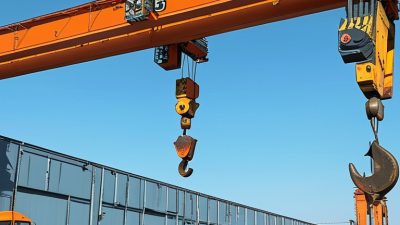
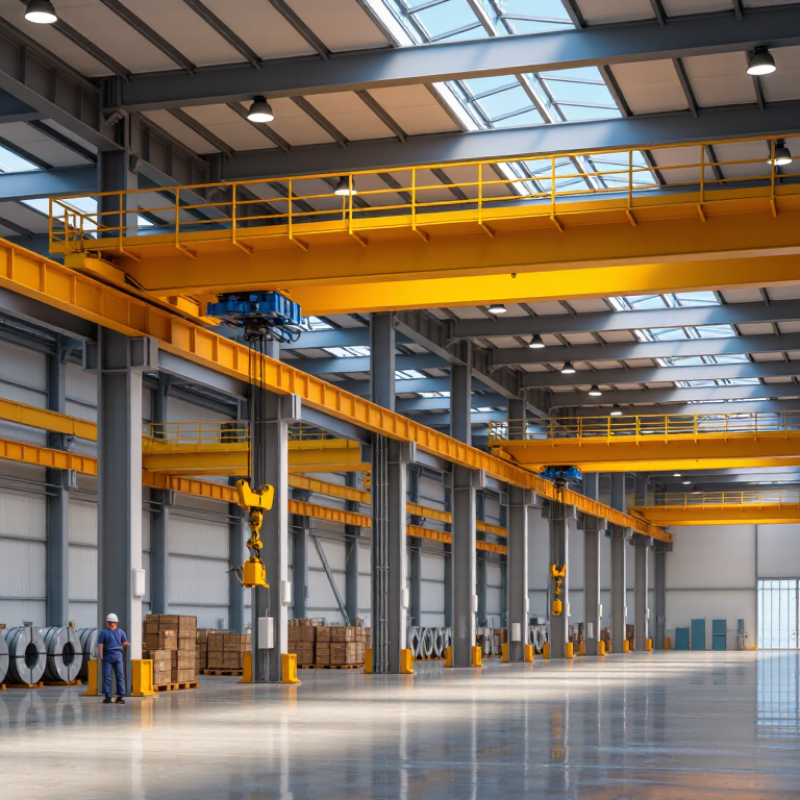
A single girder crane is an overhead lifting system with one horizontal bridge beam. Its hoist travels along the lower flange or a runway-mounted trolley. End trucks move the bridge across parallel rails, while the hoist raises and lowers loads in a controlled vertical path. In practical workshops, it often serves machine bays, warehouses, fabrication areas, and maintenance zones.

The design usually weighs less than a double girder crane. That can reduce building loads, runway steel, and installation requirements. It also supports practical lifting capacities, commonly from 1 to 20 tonnes, depending on span, duty class, and configuration. Fortune Business Insights reported that the global overhead crane market reached about USD 4.88 billion in 2023. Its forecast also indicates continued growth through 2032. Single girder systems benefit from this wider demand for efficient material handling.

The “simple” label can mislead. Load charts, wheel loads, headroom, travel speed, and duty cycles still require careful engineering. ISO 4301-1 classifies cranes by total operating time and load spectrum, not appearance. A light-duty crane may fail in a high-cycle production line. That mistake is expensive.

A 10-ton crane is not automatically suitable. Operators should check actual load frequency, hook approach, runway alignment, and building strength. In my experience, maintenance access is often underestimated. Grease points, electrical collectors, brakes, and limit switches need reachable inspection space. Performance improves when selection reflects real work, not only the maximum load.

China Top 10 Single Girder Crane Manufacturers – What Is a Single Girder Crane?

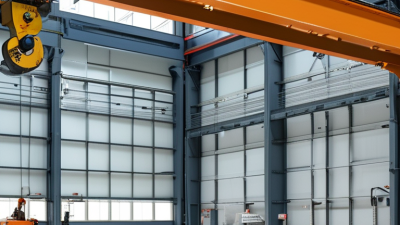
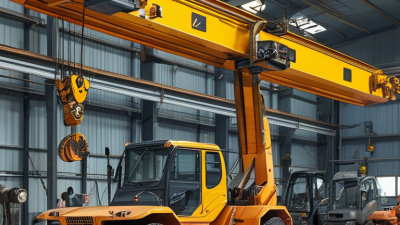
A single girder crane is an overhead crane with one main bridge girder. Its electric hoist typically travels along the lower flange of the girder, making it a practical solution for light- to medium-duty material handling in factories, warehouses, workshops, and maintenance facilities.

The chart shows commonly specified rated lifting-capacity options for single girder overhead cranes. Actual selection depends on the working load, span, lifting height, duty classification, travel speed, and installation conditions.

How China’s Top Manufacturers Are Evaluated

China Top 10 Single Girder Crane Manufacturers

Evaluating leading single girder crane manufacturers requires more than comparing prices and product photos. Experienced buyers inspect engineering drawings, welding procedures, motor selection, and load calculations. They also check whether the manufacturer can provide clear material certificates and complete inspection records. A reliable factory should explain its design choices in practical language, not hide behind technical terms.

Factory audits reveal details that websites often miss. Evaluators may examine weld quality, paint thickness, component storage, and final assembly areas. They should observe no-load and rated-load tests when possible. Test data must match the crane’s serial number and configuration. Delivery records, installation guidance, spare-part availability, and response times also matter. Customer references from similar working environments provide stronger evidence than general testimonials.

Price still influences the shortlist. It should not control the decision. A lower quotation may exclude runway adjustments, operator training, or future maintenance. This is where evaluation becomes imperfect. One factory visit cannot predict every production problem, and a polished sample may not represent average output. Independent inspection reduces this uncertainty, although it adds cost and time. Evaluators should record findings carefully, compare identical specifications, and question unexplained differences. Even experienced teams can overlook small details, such as access to electrical panels or the real clearance above a workshop floor.

Profiles of China’s Top 10 Single Girder Crane Manufacturers

China’s top 10 single girder crane manufacturers serve different lifting needs, industries, and project environments. Their profiles reveal more than production capacity. They show how engineering experience, testing discipline, and after-sales support influence crane reliability.

One manufacturer focuses on compact cranes for workshops and warehouses. Another specializes in long-span systems for steel fabrication plants. A third develops low-headroom designs for buildings with limited clearance.

Some concentrate on export projects and provide multilingual documentation. Others emphasize customized controls, variable lifting speeds, and remote monitoring.

One profile stands out for strong component testing before assembly. Another highlights corrosion protection for coastal factories. A heavy-industry producer designs cranes for dusty, high-temperature work areas.

A technology-oriented supplier integrates load sensors and fault alerts. The final profile represents a flexible manufacturer serving smaller businesses with practical configurations.

On-site experience shows that a suitable crane is rarely chosen by lifting capacity alone.

Runway alignment, duty class, hook height, floor conditions, and maintenance access matter equally. Manufacturers with reliable technical teams usually ask detailed questions before quoting.

That is a useful sign.

However, published claims still require careful checking. Buyers should review inspection records, welding procedures, electrical protection, spare-part availability, and response times.

Some profiles look impressive on paper but provide limited evidence of field performance. That weakness deserves attention.

A dependable manufacturer should explain design limits clearly, support operator training, and provide manuals that technicians can actually use.

Key Products, Technologies, and Industry Applications

China’s top ten single girder crane manufacturers are often compared through their products, technologies, and application records. Their main offerings include electric overhead cranes, underslung cranes, portable gantry cranes, and customized lifting systems. A practical supplier should provide clear load charts, tested components, and maintenance documents.

Modern single girder cranes use variable-frequency drives for smoother starts and reduced load swing. Some systems add anti-sway controls, overload protection, wireless monitoring, and travel-limit sensors. FEM-based design can improve girder strength while reducing unnecessary steel. In real workshops, these features matter near CNC machines, steel coils, warehouse racks, and assembly lines. I have found that remote diagnostics save time, but they cannot replace physical inspections. That detail is easy to overlook.

Tips: Check the working class, duty cycle, span, lifting height, and power supply before comparing prices. Ask for test records, welding procedures, component origins, and local service capacity. A crane may look efficient on paper, yet poor runway alignment can cause noise, wheel wear, and uneven travel. Independent inspection is wise. No ranking is perfect. Performance depends on installation quality, operator training, and regular maintenance.

How to Choose the Right Chinese Crane Manufacturer

China Top 10 Single Girder Crane Manufacturers: How to Choose the Right Chinese Crane Manufacturer

China’s single girder crane market offers many capable suppliers, but price alone is a poor filter. Fortune Business Insights valued the global overhead crane market at USD 4.83 billion in 2023. It projects USD 7.04 billion by 2032. This growth increases supplier choices, but also creates more room for weak specifications. Look beyond price.

Ask for a load chart, duty classification, brake details, and runway compatibility. Compare the design with ISO 4301-1 and FEM lifting requirements. A reliable manufacturer should provide weld inspection records, material certificates, motor data, and a complete test procedure. ISO 9001 certification helps, but it does not prove engineering quality. Factory evidence matters more. Inspect the welding area, machining equipment, paint process, and spare-parts storage through an independent audit or live video review.

Experience changes the buying decision. Request references for cranes with similar span, lifting height, working cycles, and indoor conditions. Confirm factory acceptance testing before shipment. The test should cover rated-load lifting, limit switches, emergency stopping, travel alignment, and noise. Ask how quickly the supplier handles faults in your region. A written response-time commitment is useful. A vague promise is not. I would also question unusually low quotations, because omitted items often appear later as installation delays, weak documentation, or expensive replacement parts. The difficult lesson is simple: a polished catalog cannot replace traceable production records and practical after-sales support.

China Top 10 Single Girder Crane Manufacturers - How to Choose the Right Chinese Crane Manufacturer

Non-branded comparison table based on commonly published Chinese overhead-crane specifications and procurement benchmarks

Rank Anonymous Manufacturer Profile Typical Product Focus Typical SWL Typical Span Typical Lift Height Duty Classification Documentation to Request Indicative Lead Time Typical Warranty Best Fit
1 Profile A — Export-Oriented Generalist Standard electric single-girder overhead cranes 1–20 t 7.5–31.5 m 6–30 m A3–A5 / M3–M5 GA drawing, load calculations, test certificate, operating manual 25–45 days 12 months General manufacturing and warehouse applications
2 Profile B — Heavy Fabrication Specialist Reinforced single-girder cranes for steel and machinery plants 5–32 t 10.5–34.5 m 6–24 m A5–A6 / M5–M6 Structural calculation, weld inspection record, material certificates 35–60 days 12–18 months Frequent lifting and higher daily operating cycles
3 Profile C — Compact Workshop Supplier Low-headroom and compact workshop cranes 1–10 t 6–25 m 4.5–18 m A3–A4 / M3–M4 Headroom drawing, wheel-load data, electrical schematic 20–40 days 12 months Small workshops and buildings with limited clearance
4 Profile D — Process-Industry Integrator Crane systems integrated with production lines 2–16 t 8–30 m 6–20 m A4–A5 / M4–M5 Interface drawings, control logic, commissioning plan, risk assessment 35–55 days 12 months Automotive, component, packaging, and process facilities
5 Profile E — Cost-Optimized Standard Supplier Standard-duty cranes with configurable components 1–15 t 7.5–28.5 m 6–24 m A3–A4 / M3–M4 Technical offer, component list, spare-parts list, inspection checklist 20–35 days 12 months Budget-sensitive projects with standard operating conditions
6 Profile F — Outdoor and Corrosion-Protection Specialist Weather-resistant cranes for covered or outdoor service 3–20 t 10.5–31.5 m 6–18 m A4–A5 / M4–M5 Paint specification, enclosure rating, climate data, anti-corrosion plan 35–60 days 12 months Yards, ports, corrosive environments, and humid regions
7 Profile G — Variable-Speed Controls Specialist Cranes with inverter drives and positioning control 2–20 t 8–32 m 6–25 m A4–A5 / M4–M5 Drive parameters, control schematic, speed data, acceptance-test procedure 30–55 days 12–18 months Precision handling and reduced-load-swing applications
8 Profile H — Retrofit and Replacement Specialist Replacement cranes and upgrades for existing runways 1–25 t 6–30 m 5–24 m A3–A5 / M3–M5 Existing runway survey, wheel-load report, dimensional compatibility drawing 30–50 days 12 months Factories replacing obsolete hoists or bridge equipment
9 Profile I — Safety and Compliance-Focused Supplier Cranes supplied with expanded inspection and safety files 2–20 t 8–30 m 6–20 m A4–A5 / M4–M5 Risk assessment, NDT records, load test report, conformity documentation 35–60 days 12–18 months Export projects with strict customer or authority inspections
10 Profile J — Service and Spare-Parts-Oriented Supplier Standard cranes supported by replacement-part packages 1–16 t 7.5–28.5 m 6–24 m A3–A5 / M3–M5 Recommended spare-parts list, maintenance schedule, service response terms 25–45 days 12 months Users prioritizing maintainability and long-term operating support
Selection note: Duty classifications, rated capacities, dimensions, lead times, and warranty terms are indicative market ranges rather than rankings of named companies. Confirm structural calculations, applicable local regulations, runway compatibility, electrical requirements, inspection scope, and after-sales responsibilities in the final quotation.